


Reverse Dutch Auction: What It Is and How It Works

Last update: September 14, 2026
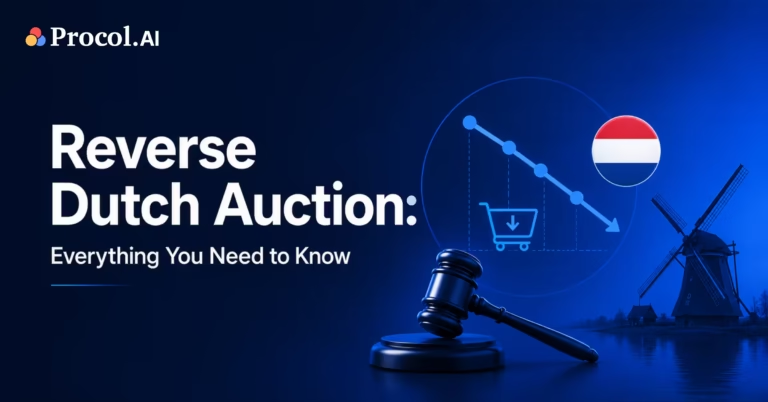
Procurement teams today are expected to reduce costs, shorten sourcing cycles, and build a more resilient supply chain. Typically, the traditional negotiation process delays purchasing decision-making, particularly for commodities. This is where a Reverse Dutch Auction steps in.
Combined with fast-track timelines and competitive pricing, it lets enterprises finalize awards efficiently, allowing the supplier market to compete fairly and equally. Applied correctly to the right spend categories, it delivers measurable operational improvements and real cost reductions.
Key Takeaways
What is a reverse Dutch auction?
A reverse Dutch auction is an auction where a buyer purchases products or services and competing suppliers bid each other down on price. The auction system displays a rising price at regular intervals until a supplier accepts it and wins the bid. It works well for easily standardized procurements, large quantities of goods in large, competitive supplier markets, and time-sensitive sourcing.

Key things to know about reverse Dutch auctions
A reverse Dutch auction, or Dutch Reverse Auction, is a type of RFx that contains a list of items that buyers want to procure. In this auction, the buyer sets the starting price, increments, and timeframe upfront. and allows the price to slowly increase until a supplier accepts the offer.
The most important thing is understanding when and how a reverse Dutch auction works, which is essential before using it in your sourcing strategy.
1) The auction starts with a low price
Every reverse Dutch auction begins with a price below the expected market rate. Instead of reducing prices through continuous bidding, the system automatically increases the price after fixed intervals until a supplier accepts it.
Suppliers must decide whether to secure the contract immediately or wait for a better price while risking another participant accepting the offer first. This balance between timing and profitability makes the auction highly competitive.
2) The auction works best with multiple suppliers
A Dutch reverse auction delivers the best results when many qualified suppliers can provide the same product or service. More suppliers create stronger competition, increasing the likelihood of obtaining competitive pricing.
This format is commonly used for commodities, packaging materials, logistics, facility management services, office supplies, and other standardized procurement categories where technical differentiation is minimal.
3) Reverse Dutch auction delivers speed and transparency
One of the key benefits of a reverse Dutch auction is that it is quick. Since the auction will end when a vendor is willing to bid at a shown amount, there is no drawn-out process that occurs with traditional auctions.
All suppliers operate on the same bidding sequence and follow the same auction processes to give transparency and ensure an equitable playing field, while at the same time saving on sourcing cycles.
4) Disadvantages of Reverse Dutch Auctions
The reverse Dutch auction may not be ideal in all sourcing situations, despite being successful for numerous events. The speed at which a supplier must take an offer can force them to submit aggressively low bid prices that may impact the profit margins of services they render over time.
Complex sourcing events, for example, would benefit less from a reverse Dutch auction compared to events where collaboration and innovation can be evaluated beyond just price.
How does a reverse Dutch auction work?
The reverse Dutch auction follows a structured process designed to simplify supplier competition while reducing sourcing timelines. It is a procurement process where a buyer starts with a low bid for goods or services, and the price increases gradually over time.
The buyer first identifies the need for procurement and qualifies the participating vendors, and then configures the auction in order to include details of the initial offer price, increments, timeframes, and the maximum purchase price. Once the event begins, suppliers monitor the displayed price as it gradually increases.
Bidders don’t have to compete with numerous different bids; instead, they can just opt to bid or not. The first supplier to accept the displayed price closes the auction and wins the contract. Of the contract or order.
Unlike conventional reverse auctions that require continuous bidding, the Dutch reverse auction focuses on supplier timing, making it an efficient solution for standardized and high-volume purchases.
When to use a Dutch reverse auction?
The choice of auction format can be as crucial as the choice of the right supplier. A reverse Dutch auction is ideal for the procurement team that primarily focuses on cost and quick decision-making with uniform specifications. You should use a reverse Dutch auction when you need to procure any standard, commodity goods or services fast, and with a limited pool of pre-qualified vendors.
It is particularly effective for:
1) Commodity procurement
2) Hospitality and food purchases
3) Packaging materials
4) Facility management services
5) Logistics and transportation contracts
6) Products with frequently changing market prices
But in the case of custom equipment, engineered projects, strategic outsourcing, or long-term partnerships where quality, innovation, and collaborative support are at least as important as cost, it is not the desired format for companies.

Key features to look for in Dutch reverse auction software
Technology plays a critical role in ensuring a successful Dutch reverse auction. The right procurement platform should simplify complex event creation while automating sourcing events where the price of an item or service automatically rises at fixed intervals until a supplier accepts the bid. By providing buyers and suppliers with complete visibility throughout the auction, the reverse auction software helps save time and secure the best possible value.
Key capabilities include:
1) Easy to use, like Procol’s auction platform
2) Configurable starting, reserve, maximum prices, and other auction parameters
3) Flexible price increments and countdown intervals
4) Secure supplier invitations and participation
5) Real-time auction monitoring
6) Automated auction closure upon bid acceptance
7) Audit trails and compliance reporting
8) Dynamic quantity allocation
9) Live analytics to evaluate supplier participation and savings
Modern procurement solutions take auction data one step further by integrating the information into your sourcing and contract management processes, providing teams with a comprehensive look at supplier performance, contracts, and spending.
Advantages and disadvantages of a reverse Dutch auction
A reverse Dutch auction delivers measurable results when matched to the right spend category, but it has real limits that procurement teams should weigh before committing to the format.
Here are the advantages and disadvantages of a Dutch reverse auction:
Advantages
1) Rapid procurement: The rising-price structure moves decisively; once a supplier accepts, the award is immediate, cutting weeks of traditional negotiation down to a single timed event.
2) Significant savings for buyers: Goods are sourced at the least expensive rate achievable for buyers on the market, and the negotiation tension does the heavy lifting that usually takes months.
3)Equal opportunity for all suppliers: Every participant sees the same price at the same time, creating a level playing field where suppliers compete without seeing each other’s bids or identities.
4) Volume flexibility: Buyers with high volume needs can accept multiple offers at the clearing price, filling their full requirement in one event instead of several.
Disadvantages
1) Supplier relationship strain: A race to the bottom for prices will not foster trust, and ultimately, vendors may deprioritize you when supply runs tight in the future.
2) Quality and stability risk: It may sound great to get the lowest stable cost, but suppliers cut costs elsewhere to keep their margins safe. This is where the risk to quality and delays becomes part of the deal, and your contract might fail halfway through the job.
3) High pressure, limited reaction time: The fast-paced, all-or-nothing format pushes suppliers to decide in seconds, causing experienced or high-value vendors to opt out rather than risk an unsustainable commitment.
4) Ignores non-price value entirely: Service levels, customization capability, long-term maintenance, and innovation potential are invisible in this format — making it the wrong choice for any strategic or complex category.
Is a reverse Dutch auction right for your sourcing strategy?
A reverse Dutch auction is a useful method for companies that want to shorten the time between sourcing decisions and the best price, while maintaining full visibility. Teams looking to run an auction need to research spend, find categories to be auctioned, and design auction conditions that stimulate competitive supplier activity.
Agentic procurement software, like Procol, assists in overcoming this by allowing organizations to hold data-rich, governable, and auditable reverse Dutch Auction processes along with other eAuction categories to make savings achievable and deliver procurement performance at speed.
Frequently asked questions
When should procurement teams use a reverse Dutch auction?
This is a good method for standardized goods or high-volume services such as packaging, logistics, or facility services, from a large, competitive base of suppliers. Since the price structure rises, this encourages vendors who know where to set their lowest cost barrier. This method isn’t good for engineered services or strategic agreements where total cost cannot be captured through price.
Younus is a Product Marketing Manager focused on technology, product strategy, and enterprise growth. He writes about procurement transformation, AI, and digital solutions that help organizations streamline sourcing and purchasing. His content translates complex procurement technology trends into practical insights for modern procurement and business leaders.
Schedule a Demo
We’d love to hear from you. Please give us a call on +91 76666 82222.
Explore more from Procol
Discover expert tips, how-to guides, industry insights, and the latest procurement trends.

10 Best Procurement Software for Businesses of All Sizes
Looking for the best procurement software companies? Compare the top 10...

Younus Sideeq • August 10, 2026

Ultimate Guide to Japanese Reverse Auction in 2026
Japanese reverse auctions offer procurement teams a smarter way to drive...
Younus Sideeq • July 9, 2026

Procol Recognized in Gartner® Hype Cycle™ 2026
Procol has been recognized in Gartner Hype Cycle for Procurement and...
Gaurav Baheti • June 23, 2026