
















Accelerated Procurement Cycles
Cut supplier onboarding and approval timelines, enabling faster sourcing decisions.

Manage the entire supplier lifecycle from seamless onboarding to live performance tracking and risk management with supplier management software.
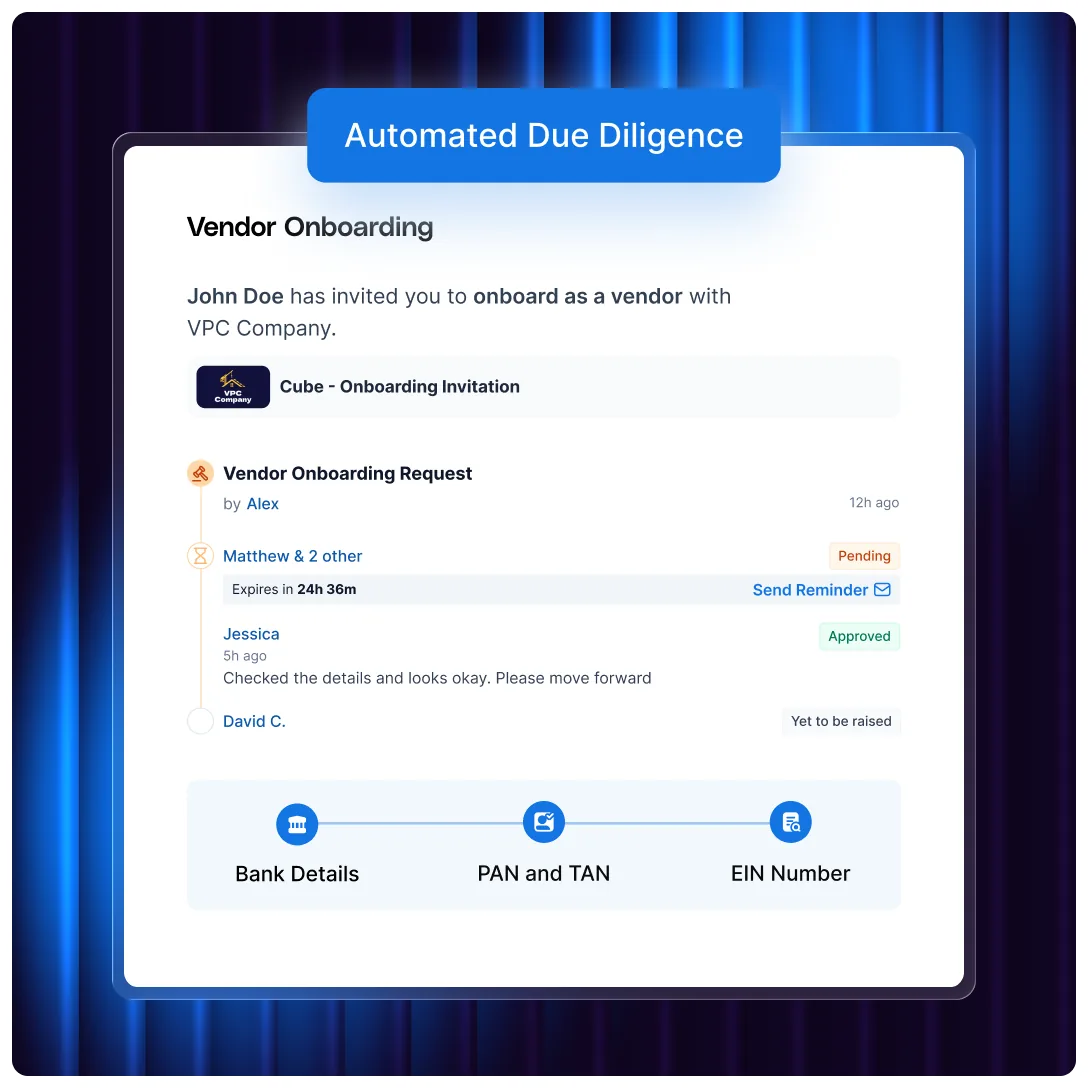
Manage every aspect of your supplier relationships with a centralized platform. Our supplier management solution empowers teams to onboard faster, monitor risk, and drive performance.
Cut supplier onboarding and approval timelines, enabling faster sourcing decisions.
Track vendor performance, pricing trends, and compliance to reduce leakage and secure better terms.
Identify, assess, and address supplier risks before they impact business operations or reputation.
Build long-term, trust-based partnerships through transparent communication and performance visibility.
Unified supplier management system to manage suppliers for efficient operations, cost control, and minimal risk.
Ensure your suppliers meet compliance, financial, and operational standards while mitigating risk.
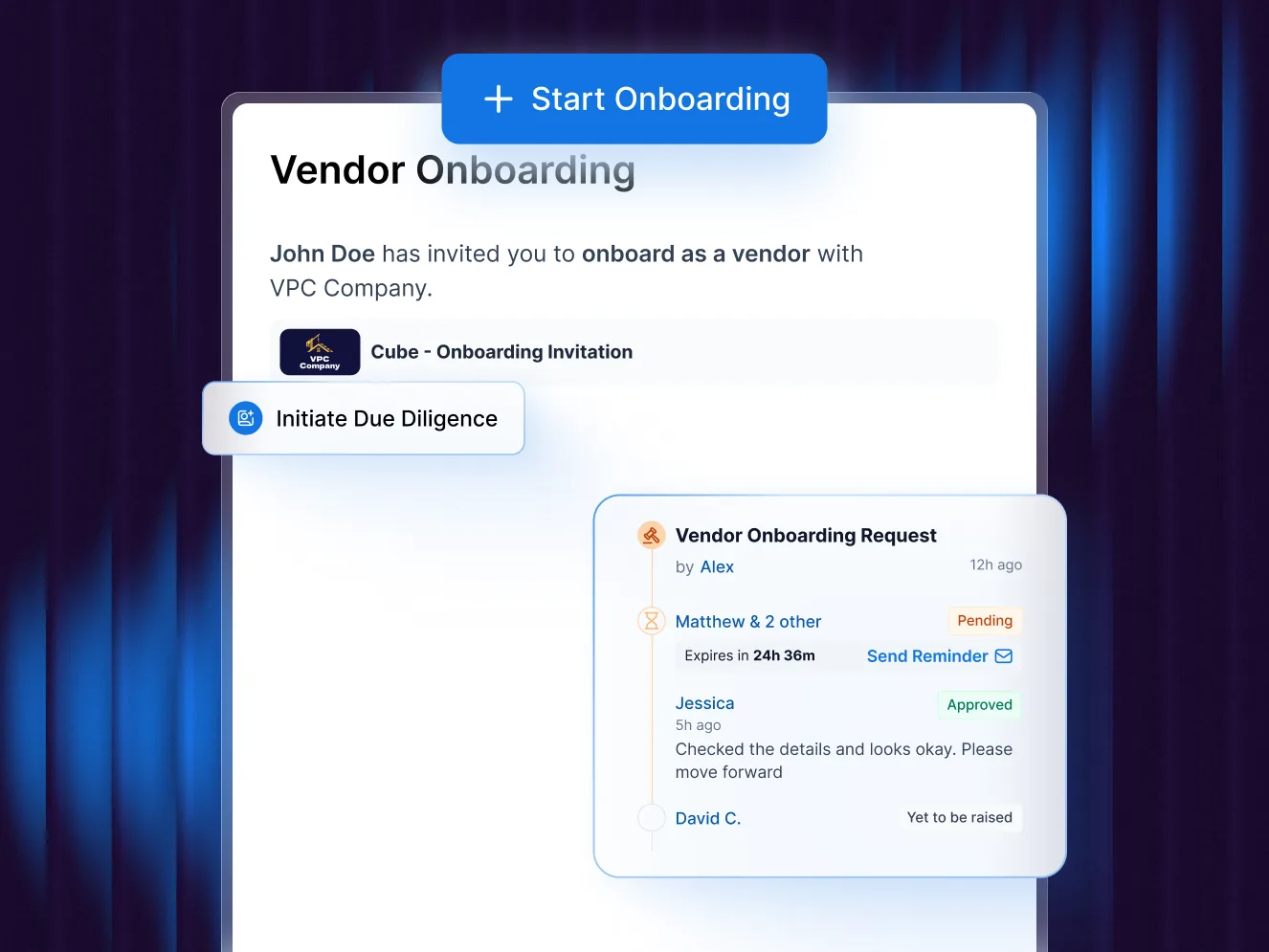
Measure and improve supplier relationships using structured data.
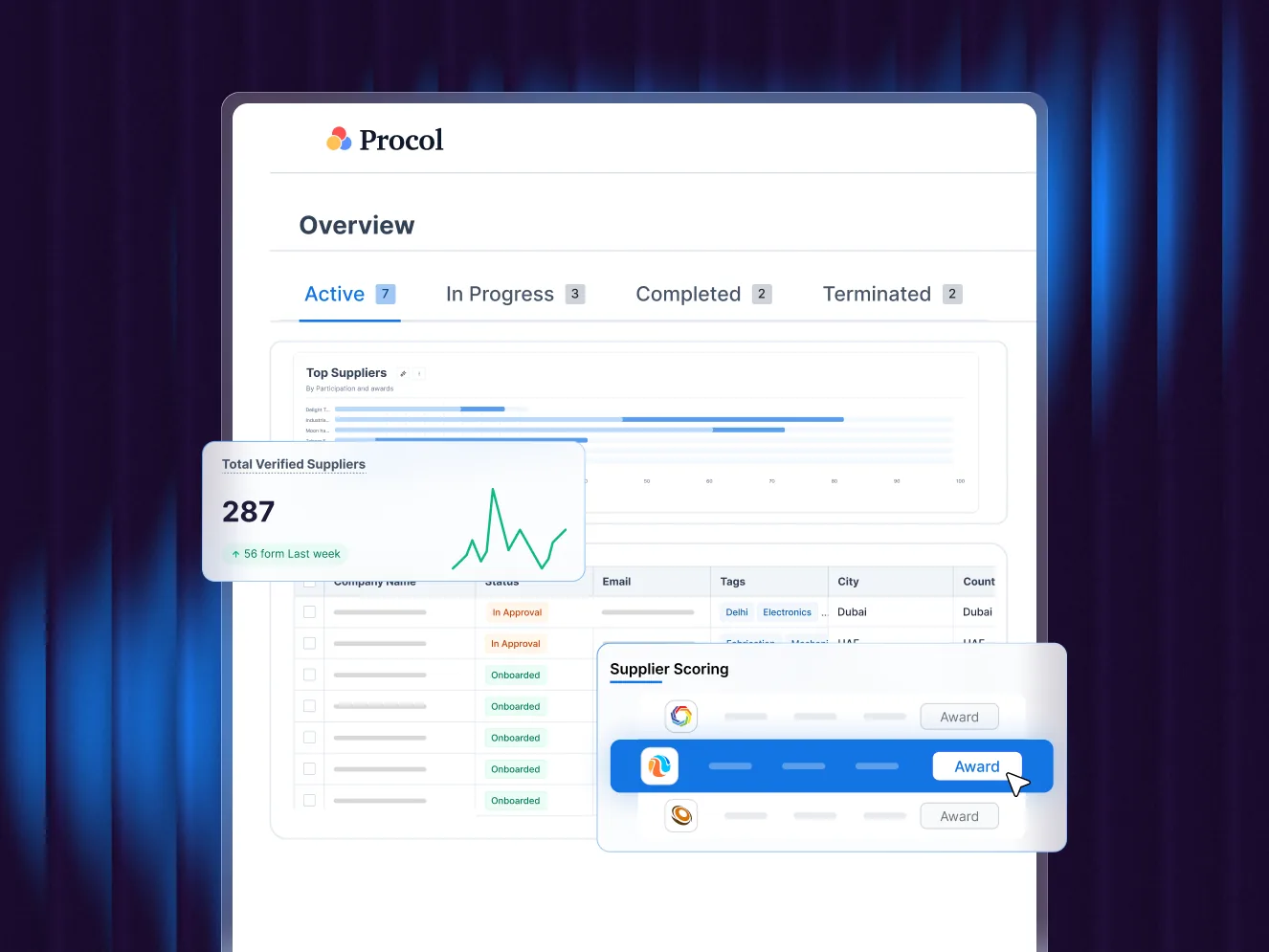
Access a unified view of each supplier across business units.
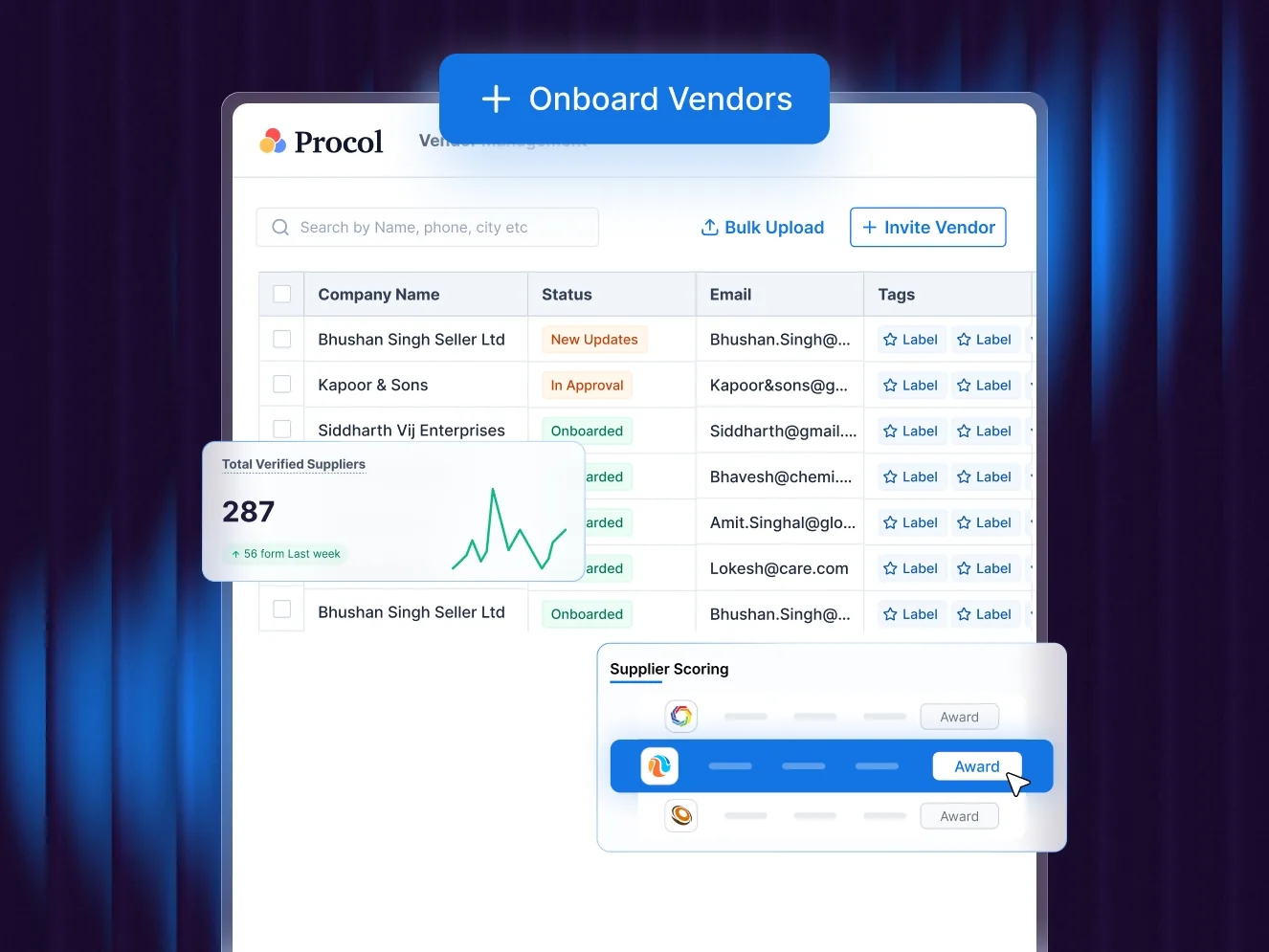
Procol helps procurement teams move faster, spend smarter, and work more collaboratively. It centralizes supplier data in one secure platform, eliminating silos and manual effort.
Engage suppliers with an intuitive, easy-to-use online portal.
Fully automate onboarding sheets, supplier creation, and validation.
Anticipate disruptions with advanced risk monitoring technology.
Customize reports for strategic supplier performance analysis.
Connect seamlessly with ERP systems for unified operations.
Procol's e-procurement system ensures smooth data flow between procurement, finance, and business teams for complete spend visibility and control.





























Enterprises manage the full supplier lifecycle on Procol, from onboarding to live performance tracking and risk management.
Built for scale, trust and compliance with globally recognized security certifications.


Everything you should know about Vendor Management Software.
Vendor onboarding is the process of empanelling or integrating a new vendor or supplier within a company's supply chain process after conducting vendor due diligence. The first task in vendor onboarding for a procurement team is to verify suppliers. This follows a myriad of tasks that come under vendor due diligence such as cost discussion, quality check, compliance with company standards of production and so on. Thus, vendor onboarding is an intricate process that is done as part of procurement.
One of the best options for vendor onboarding software is Procol. It is a supplier onboarding software that many businesses prefer to use as it enables complete control of the vendor lifecycle, from onboarding to performance monitoring. Additionally, it is a seamless vendor onboarding software that reduces approval time by almost 80% with its pre-developed workflows. With Procol’s vendor onboarding software, you can ensure that you incorporate efficiency and make your processes completely error-free.
Some mandatory steps that must be followed during vendor onboarding are conducting vendor due diligence which includes vendor verification, collating important documents, evaluating compliance with regulations and clear communication of expectations. Due diligence can be done using vendor due diligence software which guides businesses with all the steps to be followed. Once vendor onboarding is done, vendor managers usually explain all processes to the vendor and train them on existing procurement platforms used by the company. This pretty much sums up all the steps followed in the vendor onboarding process.
Supplier verification or vendor verification is an important step that procurement teams usually follow. It helps in doing a holistic assessment of the supplier before deciding to onboard them. Most businesses use vendor due diligence software to cross check all details provided by the vendor. However, some easy steps that any business can follow to do an initial round of verification include checking business license and registration details, verifying tax information and asking their other clients about the goods they offer.
Vendor due diligence refers to the process of thoroughly evaluating a vendor before deciding to finalise and onboard them for procurement needs of a company. This includes the usage of vendor due diligence tools to verify suppliers, assessing their financial health, evaluating compliance and identifying any potential risks that might be associated. Some companies also prefer running background checks as part of their vendor due diligence process for vendor verification.
The three P's of vendor due diligence are People, Process and Performance.
Not conducting the vendor due diligence process thoroughly can lead to problems for the business later. Some of these risks are financial losses, procurement of low quality goods, delay in delivery leading to shortage in inventory and overall operational disruptions. However, the most damaging repercussion is data breach which can affect business as usual (BAU) activities of the company. This is why supplier onboarding tools that help companies undertake detailed vendor verification are in high demand.
Vendor due diligence is important as it helps companies evaluate and verify suppliers thoroughly before onboarding them and beginning work. Due diligence, done with the help of vendor onboarding platforms, helps companies identify prospective financial and reputational risks, if any. Vendor due diligence services also enable companies to assess suppliers' compliance with regulatory standards so companies can be confident about the procured goods.
Vendor due diligence should be done to verify suppliers much before the stages of negotiation and contract development. Companies should take ample time in supplier verification to ensure that all suppliers that are being onboarded are safe to work with. This helps in avoiding any issues at a later stage once work has begun. Some such issues are delayed deliveries, questionable quality of work and loss of finances.
The seven steps of supplier evaluation that are done as part of vendor due diligence are:
