














Siloed processes, people, and tools
Sourcing, contracting, supplier management, purchasing, and payments operate across disconnected tools and teams, creating bottlenecks at every handoff and leading to inconsistent data.

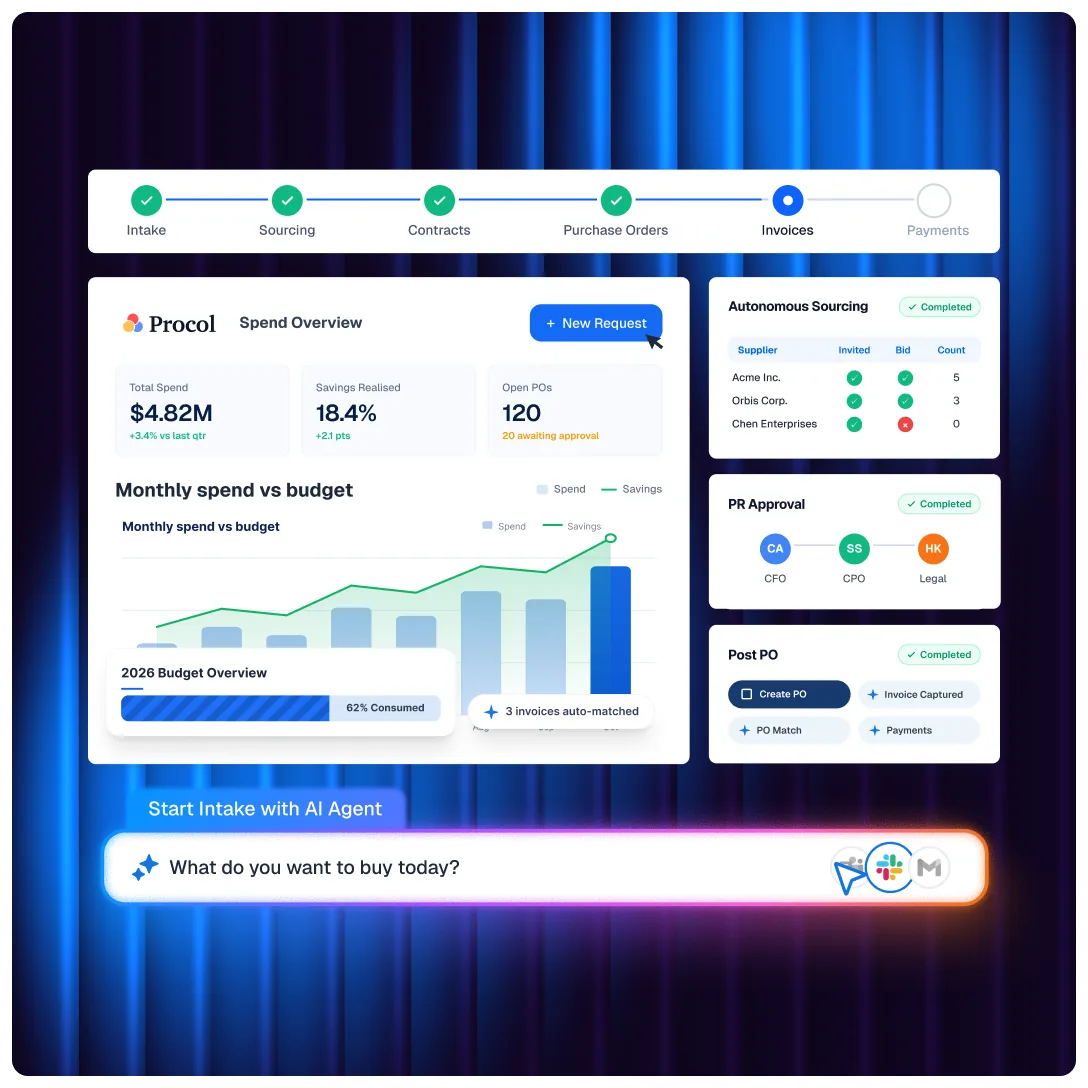
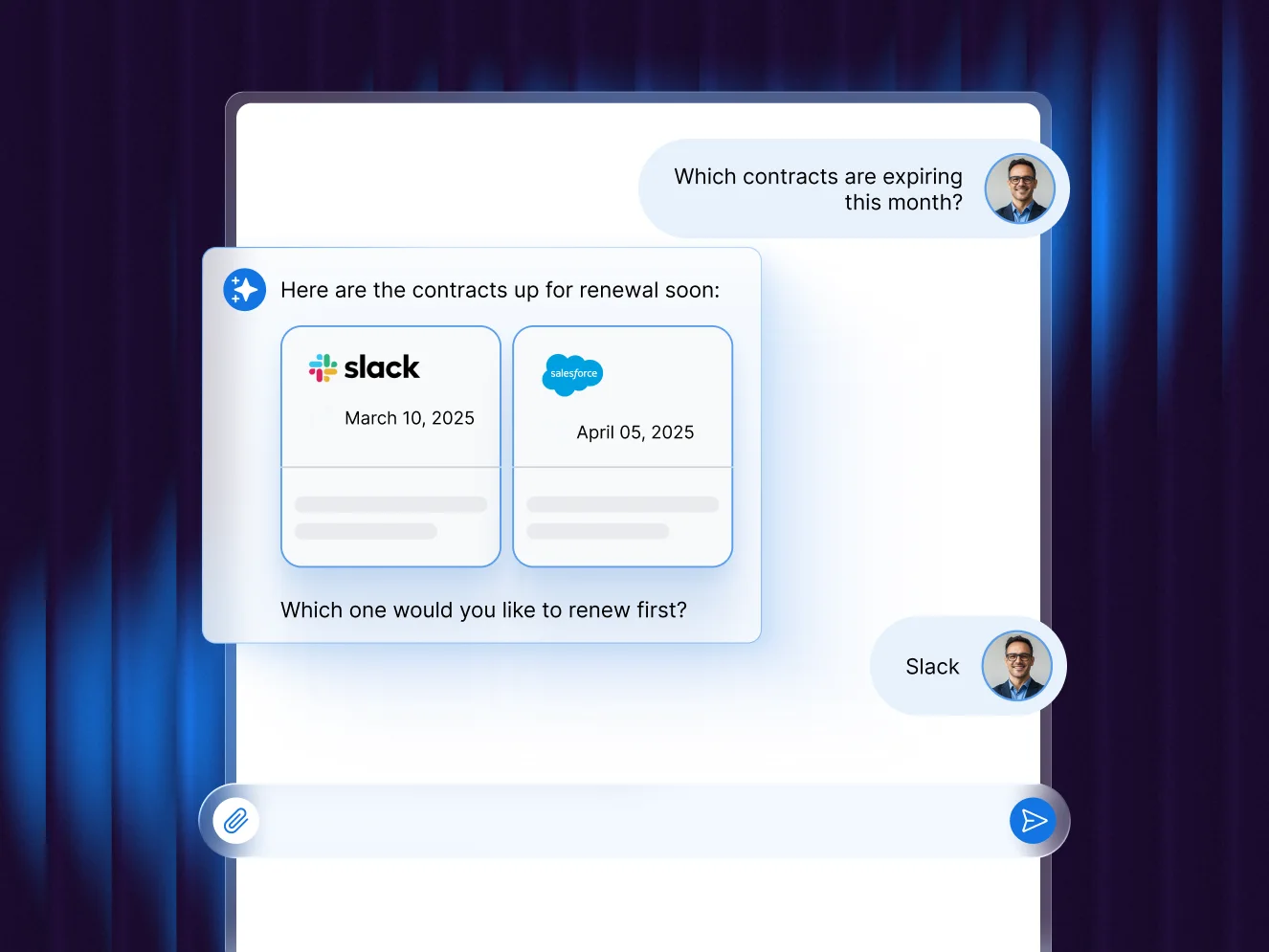
Manage the entire procurement lifecycle on a unified AI-powered Source-to-Pay platform, with AI agents that execute sourcing, approvals, and payments inside the systems you already run.
From request to payment, disconnected systems, limited visibility and manual effort cost procurement time, control and savings.
Sourcing, contracting, supplier management, purchasing, and payments operate across disconnected tools and teams, creating bottlenecks at every handoff and leading to inconsistent data.
Purchases happens outside approved channels and contracts, while fragmented supplier data limits spend visibility, weakens control, and leaves risks undetected.
Approvals, purchase orders and invoice matching are handled manually, stretching cycle times, delaying payments, raising processing costs and eroding negotiated savings.
From sourcing and contracting to invoicing and payments, run your entire procurement lifecycle on a single source to pay procurement software platform.
Give every purchase request one front door. Bring every purchase request into one structured workflow before spend goes off track.
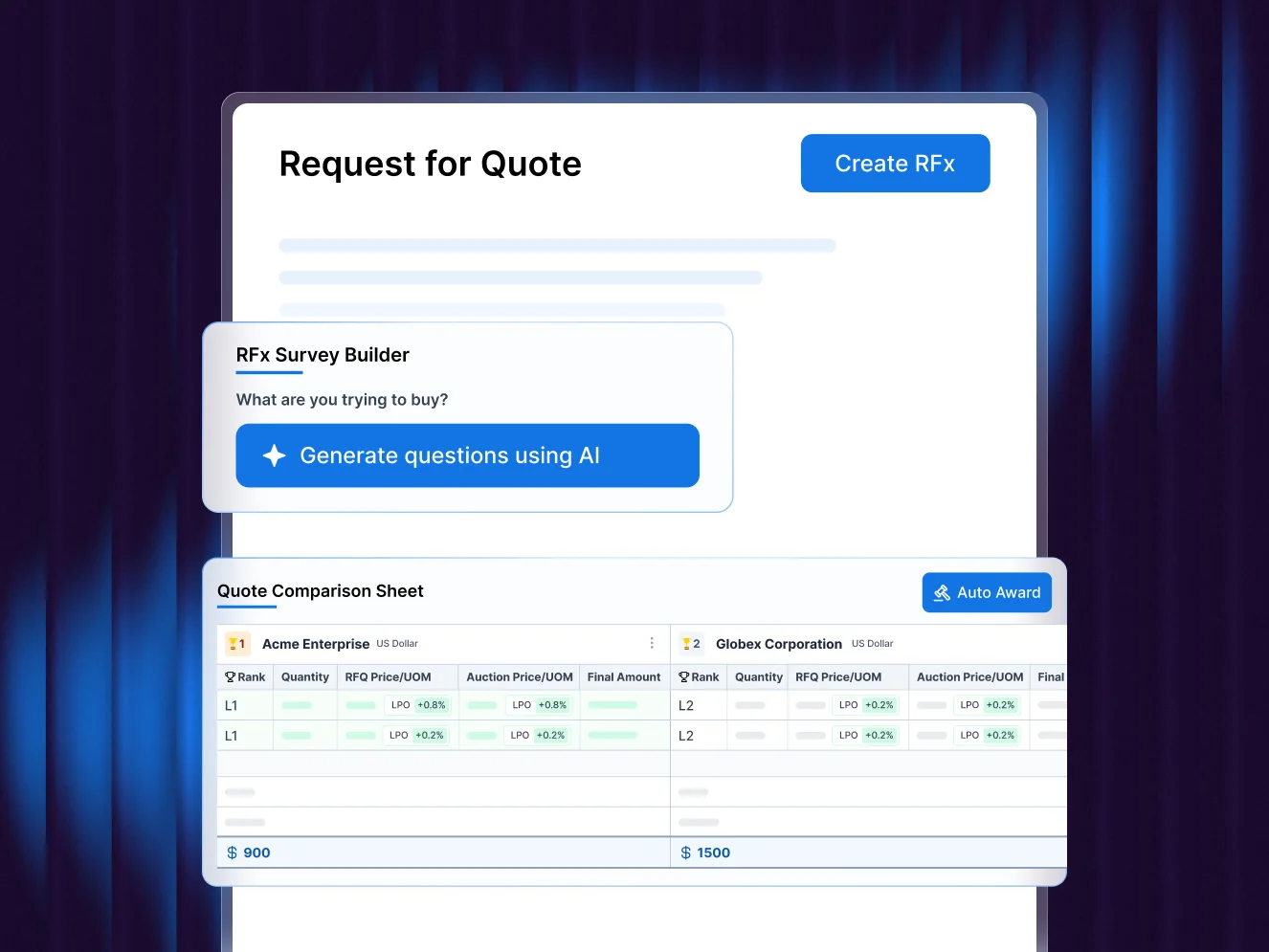
Turn every category into a negotiation you win. Simplify every sourcing event with smarter bidding, supplier evaluation, and negotiation.
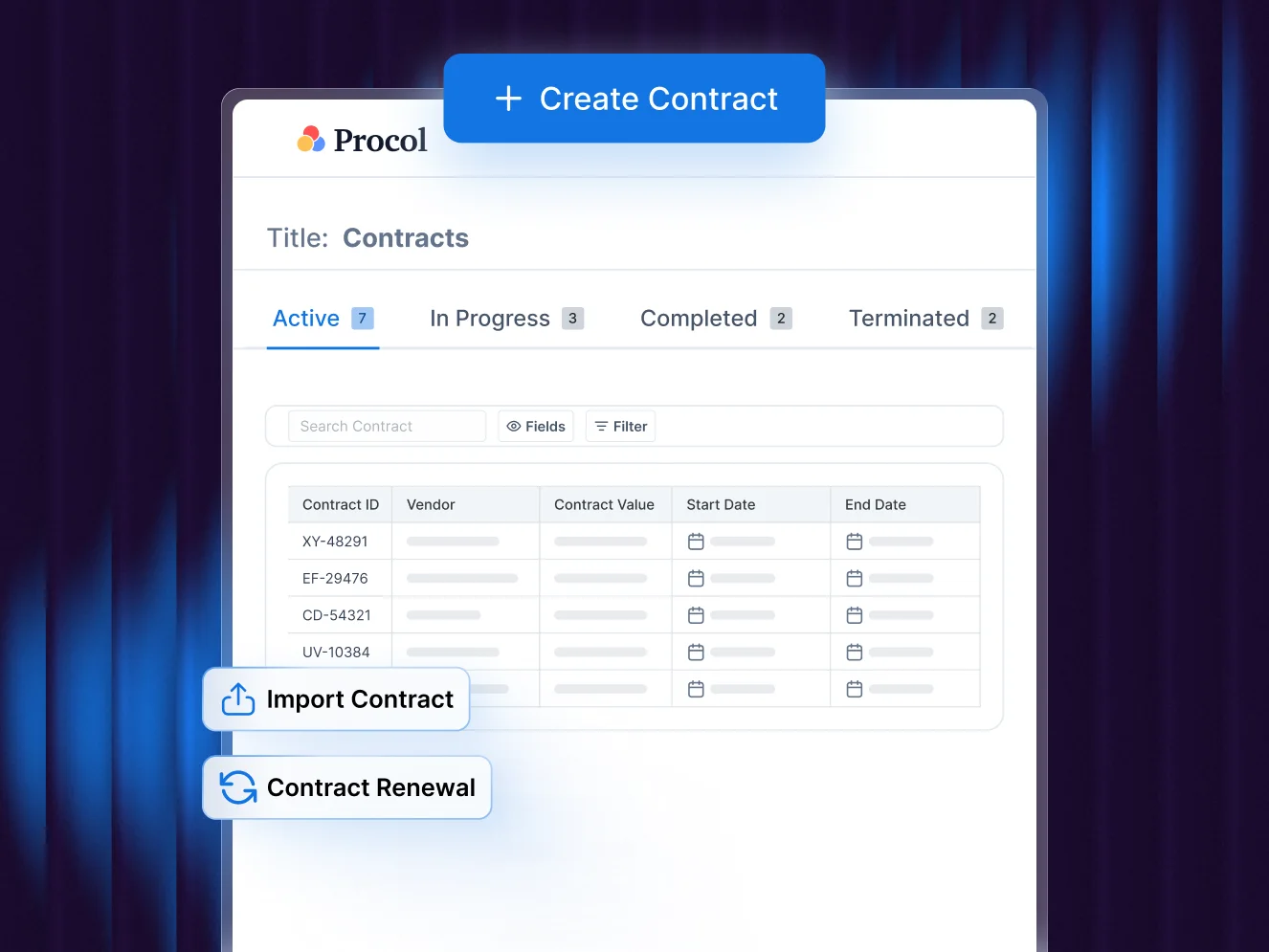
Close the gap between what you negotiated and what you enforce. Manage the entire contract lifecycle while keeping terms, obligations, and risks in view.
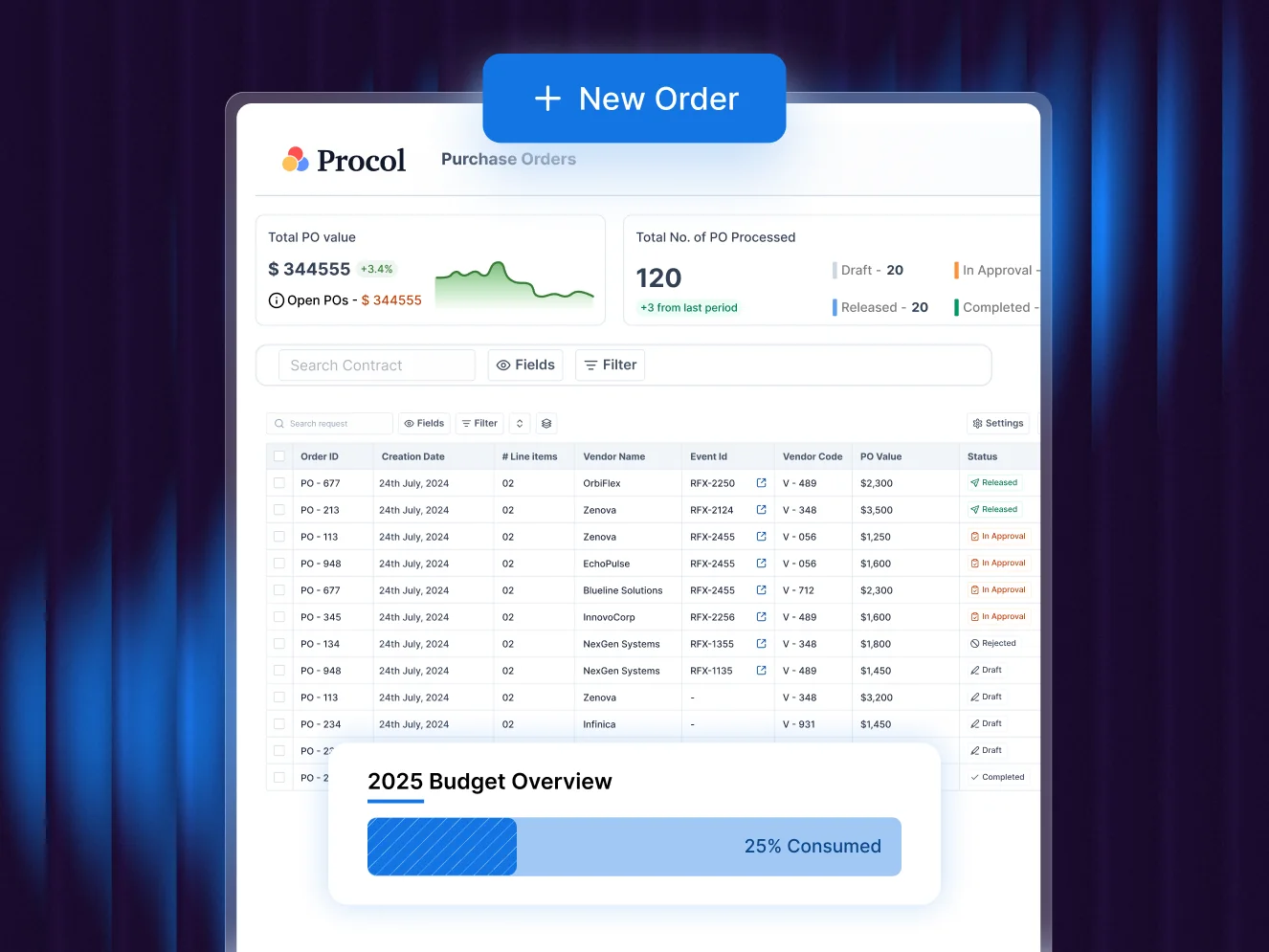
Make policy the path of least resistance. Guide every purchase through policy without adding friction to the buying process.
Treat suppliers as a portfolio, not a spreadsheet. Manage supplier performance, risk, and compliance from one connected view.
Pay accurately, on time, without manual matching. Automate invoice matching and approvals to make every payment faster, more accurate, and easier to track.
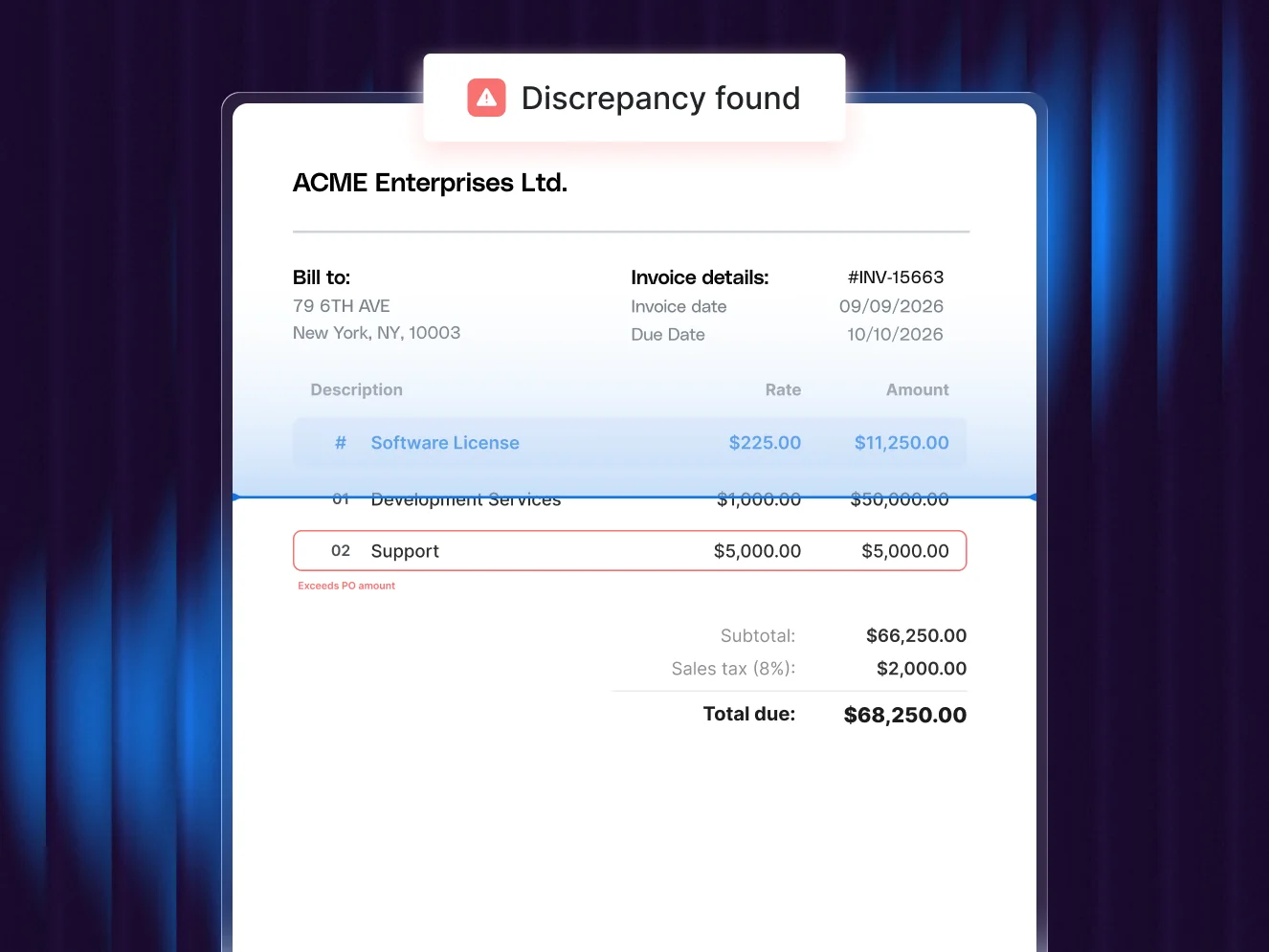
See where your spend goes, in real time. See every dollar, identify anomalies, and act before spend gets out of control.
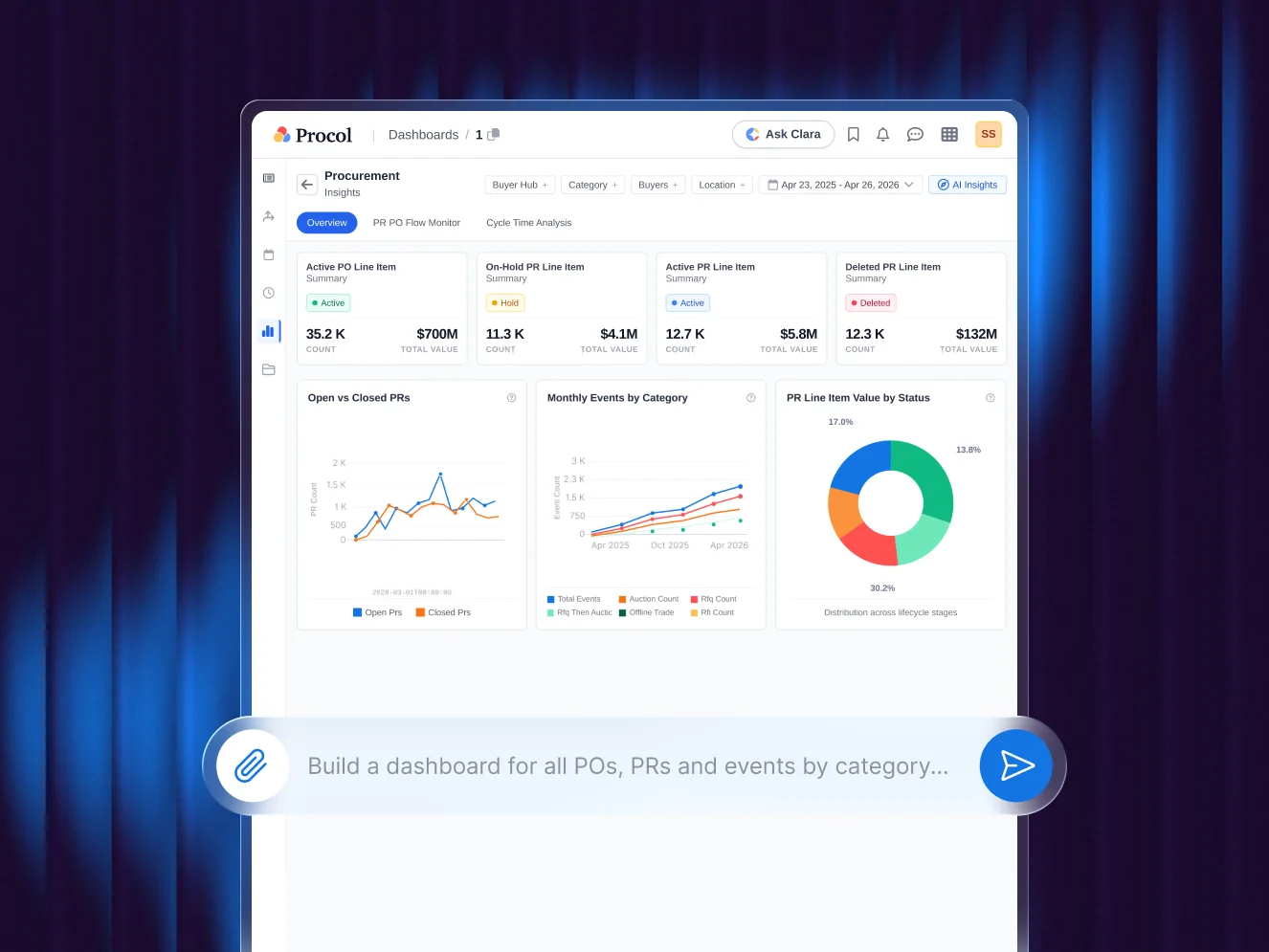
More control. More savings. Less procurement friction.
Identify savings opportunities, run competitive sourcing events, and carry negotiated pricing through every purchase. 10-20% savings on sourcing events.
Automate repetitive work from intake and sourcing to approvals and payments, so teams can move faster without adding headcount. 70% faster procurement cycles.
Guide every purchase through approved suppliers, contracts, catalogs, and policies without slowing down business users.
See where money is going across categories, suppliers, and business units, with real-time data instead of delayed reports.
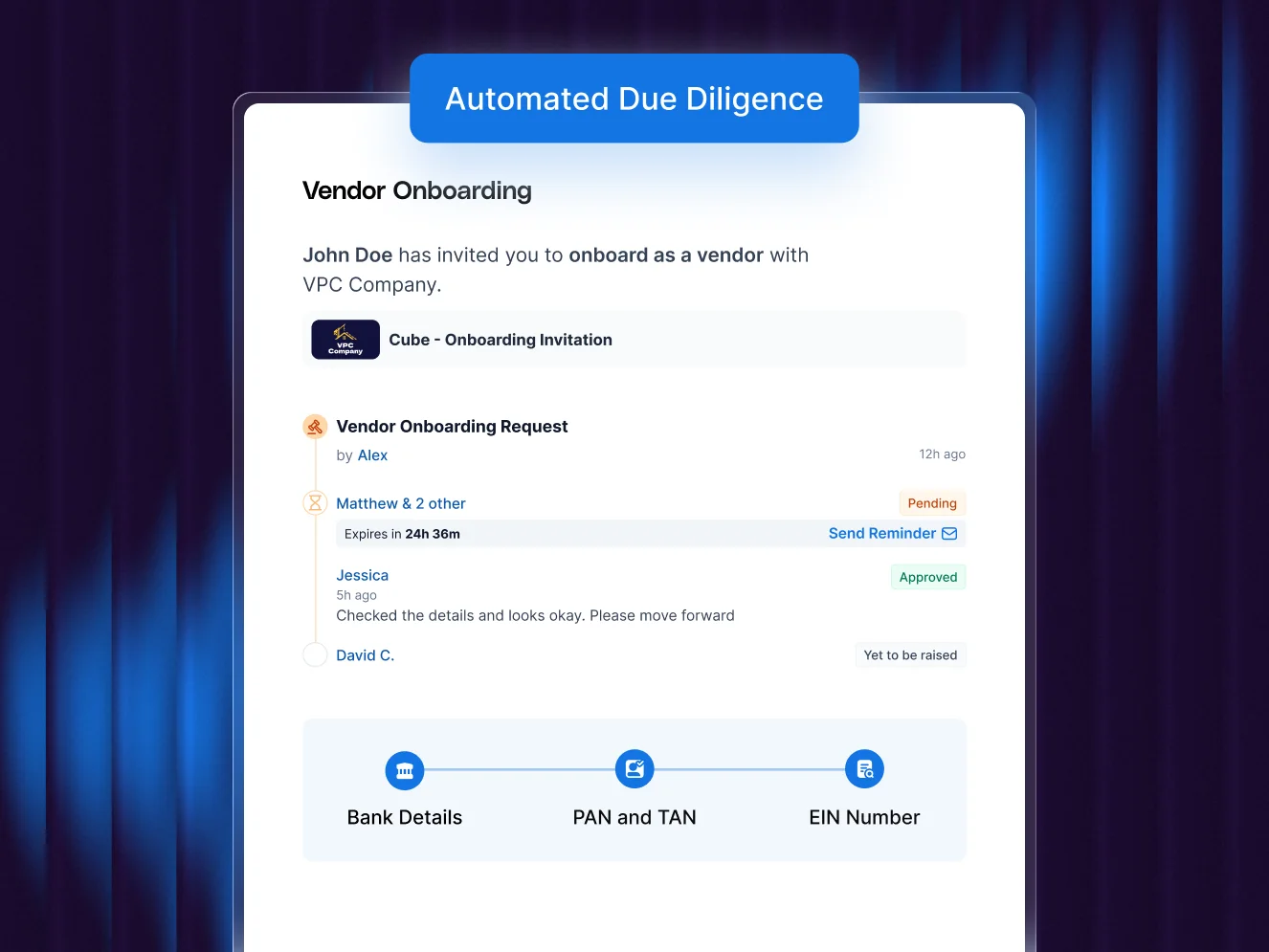
Manage supplier risk, compliance, performance, and collaboration from one connected supplier record. 50% faster vendor onboarding with automated due diligence.
Link sourcing decisions, contracts, POs, invoices, and payments so negotiated savings actually reach the bottom line. 80% faster accounts payable.
POs, receipts and invoices sync two ways with your ERP and accounting tools, so finance closes on the same numbers procurement sees.
















Procurement and finance teams run sourcing, contracts, purchasing, and payments on one connected source-to-pay platform.
Built for scale, trust and compliance with globally recognized security certifications.


Everything you should know about source-to-pay software.
Source-to-pay (S2P) is the complete procurement process that covers the entire buying cycle, from identifying business needs and sourcing and selecting suppliers to contracting, purchasing, receiving goods or services, processing invoices, and making payments, managed as one connected cycle rather than separate stages.
The major difference between S2P and P2P is the scope of the process each covers. Procure-to-pay (P2P) starts when someone raises a requisition and ends when the supplier is paid, covering POs, goods receipt, invoice matching, and payment. Source-to-pay (S2P) includes all of that plus everything upstream: identifying the need, sourcing and evaluating suppliers, running the sourcing event, and negotiating the contract.
Source-to-Settle and Source-to-Pay are often used interchangeably to define the end-to-end procurement lifecycle. While S2S refers more to the settlement process, or the last stage of payment, S2P refers to the whole lifecycle. The S2P process is usually done on online source-to-pay software, which automates the entire process into simple steps. It makes the process more efficient as it brings all stages to one unified solution.
Source-to-pay is an extensive procurement process that covers all tasks of the procurement process from beginning to end: understanding a business need, sourcing suppliers, contracting, purchasing, receipt of goods/services, invoice processing, and executing the final payment. The 8 stages of the source-to-pay process are:
An easy-to-understand example of a source to pay could be a manufacturer identifying the need for a certain raw material to build a printing machine, then looking for the right suppliers who can provide the raw material, developing and finalizing contracts to agree on terms of work. This is followed by the creation of a PO and receiving the raw material from the supplier. The manufacturers finally make payment to the supplier.
S2P is important to businesses because disconnected procurement leaks value. When sourcing, contracting, purchasing, and payment run in separate systems, negotiated savings don't carry through to what's actually bought. A source-to-pay platform connects those stages, so pricing holds from contract to invoice, purchases route through approved suppliers, and compliance is enforced rather than audited after the fact.
The best S2P solution depends on an enterprise’s procurement complexity, business needs, and scale. Source-to-pay tools include Procol, Coupa, SAP Ariba, Ivalua, Jaggaer, and GEP SMART, offering capabilities across sourcing, supplier management, procurement, contract management, invoicing, and payments. Procol's approach differs in one respect: rather than adding another system for teams to work in, its AI agents execute procurement work inside the systems enterprises already run, including SAP and Oracle.
