



Skip to content

Source-to-Contract Software That Drives Savings

Connect every stage of your source-to-contract process, from intake and supplier qualification to RFx events, eAuctions, negotiations, awards, and contracts.

Procol source-to-contract workspace with requests, sourcing events and contracts in one view

Source to contract solution used by 250+ enterprises across 10+ countries

Customer stories
Noon
Reliance
Signature Global
Hershey's
Gopal Snacks
IKEA
Pulcra Chemicals
Škoda
Quippo
Aditya Birla
M3M
AMNS
Zuari Farmhub
Saint-Gobain

Turn source-to-contract challenges into competitive advantages

Get more spend under management, make better sourcing decisions, and bring greater control to the entire source-to-contract process.

Find the savings hiding in your spend

Uncover more sourcing opportunities, create stronger supplier competition, and negotiate better outcomes across every event.

Spot supplier risk before it disrupts supply

See supplier risk, dependencies, and performance in one view, with continuous monitoring and scorecards that flag issues early.

Keep every sourcing event compliant

Standardize source-to-contract workflows with the approvals, policies, and governance that prevent value leakage and leave a complete audit trail.

Everything you need from a S2C software to source smarter, from opportunity to award

Connect every stage of the source-to-contract lifecycle in one intelligent platform.

Intake

Turn every purchase request into a sourcing-ready opportunity

  • Capture requirements in natural language and convert them into structured workflows.
  • Route requests to the right teams based on spend, category, and policy.
  • Validate budgets and identify existing contracts or preferred suppliers.
  • Move approved requirements into sourcing workflows or existing catalogs.
Clara intake prompt turning a purchase request into a sourcing workflow

eSourcing and RFx Management

Run complex RFIs, RFQs, and RFPs without relying on a spreadsheet-heavy sourcing process

  • Build and manage sourcing events using configurable templates in one workspace.
  • Evaluate technical, commercial, and compliance criteria through structured workflows.
  • Compare supplier bids side-by-side and benchmark against historical pricing.
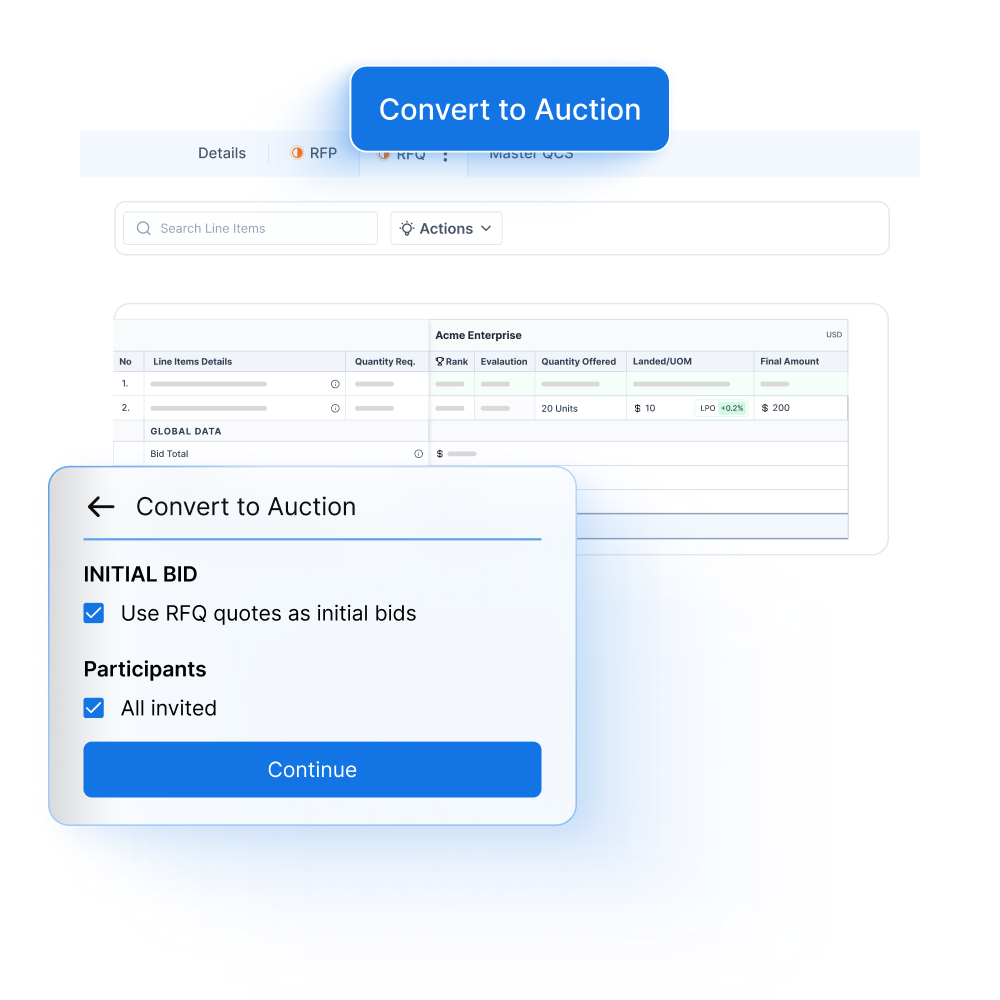
  • Convert RFQs into live eAuctions without rebuilding event or supplier data.
RFx event with live eAuction and side-by-side bid comparison

eAuctions

Create stronger competition to capture better commercial outcomes
  • Run reverse, multi-round, and dynamic auctions for different sourcing categories.
  • Track supplier participation, rankings, bid movements, and savings in real time.
  • Generate counter-offers and accelerate negotiations with buyer oversight.
  • Award based on cost, technical merit, or both, with flexible split awards.
RFQ converted to a live reverse auction in one click

Contracting

Turn negotiated sourcing outcomes into contracts without losing value along the way

  • Carry awarded pricing, terms, and supplier details directly into contracts.
  • Manage contract templates, reviews, approvals, and versions in one place.
  • Track contract expiries and receive timely alerts to prevent lapses.
  • Link contracts to purchasing and intake to ensure compliance with negotiated terms.
Contract repository with renewal tracking

Supplier Management

Build a stronger supplier base with visibility from onboarding to performance

  • Standardize supplier onboarding, documentation, and due diligence.
  • Monitor supplier dependencies, compliance, SLA breaches, and risks.
  • Track cost, quality, OTIF, and compliance through supplier scorecards.
  • Connect buyers and suppliers for sourcing, communication, and performance.
Supplier performance scorecard with risk and compliance

Predictive Analytics

Know where to source, what to save, and how every sourcing decision performs
  • Identify addressable spend, category opportunities, and sourcing potential.
  • Track potential, negotiated, and realized savings across sourcing events.
  • Benchmark pricing against historical data and model sourcing outcomes.
  • Access real-time dashboards, alerts, anomaly detection, and sourcing insights.
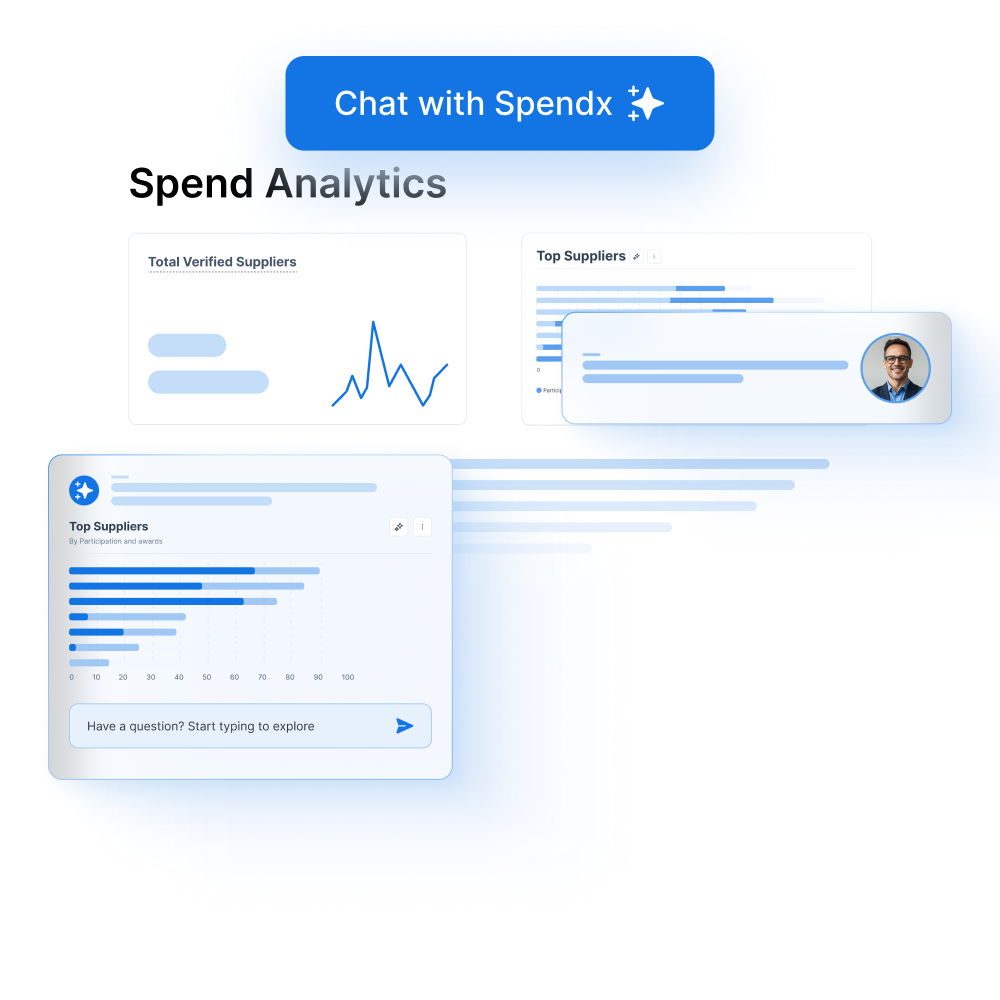
Spend insights and savings opportunities dashboard
Integrations

Intelligent source-to-contract platform that sits on top of your existing stack

Procol connects with the systems you already use, bringing sourcing, supplier, and contract workflows together while keeping your existing point solutions in place.

  • ERP & finance tools

  • Source-to-pay suites

  • CLM and E-Sign

  • Risk & compliance

  • Messaging

  • Data & insights

  • Sourcing & spend

  • Payments & cards

Source-to-contract software delivering results for leading enterprises globally

From manufacturing to construction to retail, procurement leaders choose Procol to run sourcing, manage suppliers and contracts at scale.

Governed AI agents. Infrastructure your CISO and CIO require

Built for scale, trust and compliance with globally recognized security certifications.

ISO 27001 Certified - Procol Information Security Management

ISO 27001

AICPA SOC - Procol Service Organization Control Report

AICPA SOC 1 Type I

SOC 2 Type 2 Certified - Procol Enterprise Security

SOC 2 Type II

GDPR Compliant - Procol Data Privacy Certification

GDPR

Cyber Security Insured - Procol Enterprise Security

Cyber Security Insurance

FAQs about source-to-contract software

Talk to Sales

Source-to-Contract (S2C) is the strategic procurement process to manage the journey from identifying a purchasing or sourcing requirement to selecting a supplier, negotiating commercial terms, and creating the final legally binding contract. S2C typically includes intake, spend analysis, supplier discovery and qualification, RFIs/RFQs/RFPs, eAuctions, negotiations, supplier evaluation, award management, and contracting.

There are 6 core stages spanning the Source-to-contract (S2C) process:

  • Intake and requirements gathering: Capture the new business need via an intake form and see whether a sourcing workflow needs to be utilized or a contract already exists. If sourcing, document the functional needs, priorities, and success criteria to gather all the requirements properly.
  • Spend and market analysis: Review historical data and supply markets to see where the money goes and to define a clear sourcing strategy for potential saving opportunities.
  • RFx management: Publishing documents like Requests for Information (RFI), Requests for Proposal (RFP), Requests for Quotation (RFQ), or conducting other competitive sourcing events like eAuctions.
  • Evaluation and due diligence: Conduct a proper due diligence for qualifying supplier capabilities and compliance before comparing them across price, technical capability, quality, risk, and other criteria to determine the optimal award.
  • Awarding and negotiation: Negotiate commercial terms, pricing, and resolve any contract redlines before selecting the winning supplier, while documenting all the rationale behind it.
  • Contracting: Draft the final legally binding agreement after securing all the internal approvals necessary. Store the document in a secure place and manage its renewal and compliance at a regular interval.

Source-to-Contract (S2C) manages the strategic procurement process from sourcing a requirement through supplier selection and contracting, while Procure-to-Pay (P2P) manages the transactional process from creating a purchase requisition through purchasing, invoicing, and payment. In simple terms, S2C determines what to buy, from whom, at what terms, and under which contract; P2P executes the purchase and payment.

A few widely used source-to-contract software providers:

  • Procol: Offers enterprise-level source-to-contract breadth with a modern, easy-to-use UI experience that can be implemented within weeks.
  • SAP Ariba: A massive, comprehensive suite covering global sourcing, supplier management, and contract lifecycle management.
  • Coupa: Known for deep spend management, risk control, and procurement visibility.
  • Zycus: An AI-powered platform offering automated sourcing, contract management, and spend analytics.
  • Ivalua: A flexible, highly configurable platform managing the full strategic sourcing and contract process.
  • GEP: Combines unified sourcing, contract management, and comprehensive data analytics.

A typical source-to-contract automation workflow looks like this:

  • Automated intake and spend analysis: Capture and categorize spending data in real-time, with the help of an intelligent intake portal to route and evaluate new purchase requests.
  • Sourcing and RFx automation: Platforms generate automated Request for Information (RFI), Request for Proposal (RFP), and Request for Quotation (RFQ) documents from pre-approved template libraries or with the help of generative AI trained thoroughly on their past such documents.
  • AI supplier discovery and engagement: Identify suppliers, send invitations, manage communications, and collect responses without needing any human intervention.
  • Bid evaluation and supplier selection: AI and weighted scoring matrices compare supplier proposals side-by-side, assessing pricing, capabilities, and historical performance.
  • Contract lifecycle management (CLM): Automatically draft contracts from standardized templates and route them through internal and legal review workflows with secured digital e-signatures.

These are the key benefits of source-to-contract automation:

  • Greater operational efficiency: Automates manual data entry, approvals, follow-ups, and handoffs between procurement and business teams, helping shorten sourcing and contracting cycles.
  • Higher cost savings: Brings spend, supplier, and market data together to identify sourcing opportunities, improve negotiations, and reduce unnecessary or off-contract spending.
  • Risk mitigation: Centralizes supplier information, performance, and compliance data so procurement teams can identify potential financial, operational, and supply risks earlier.
  • Better transparency and compliance: Standardizes sourcing and contracting workflows, enforces approval policies, and creates a clear audit trail for every procurement decision.
  • More time for strategy planning: Takes repetitive administrative work off procurement teams’ day-to-day process, allowing them to focus on category strategy, supplier relationships, negotiations, and higher-value sourcing initiatives.