Rutuparna Rout • January 29, 2026
10 best contract lifecycle management software (2026) Features & more

ProcolContent Writer
Last update: February 4, 2026
16 min read
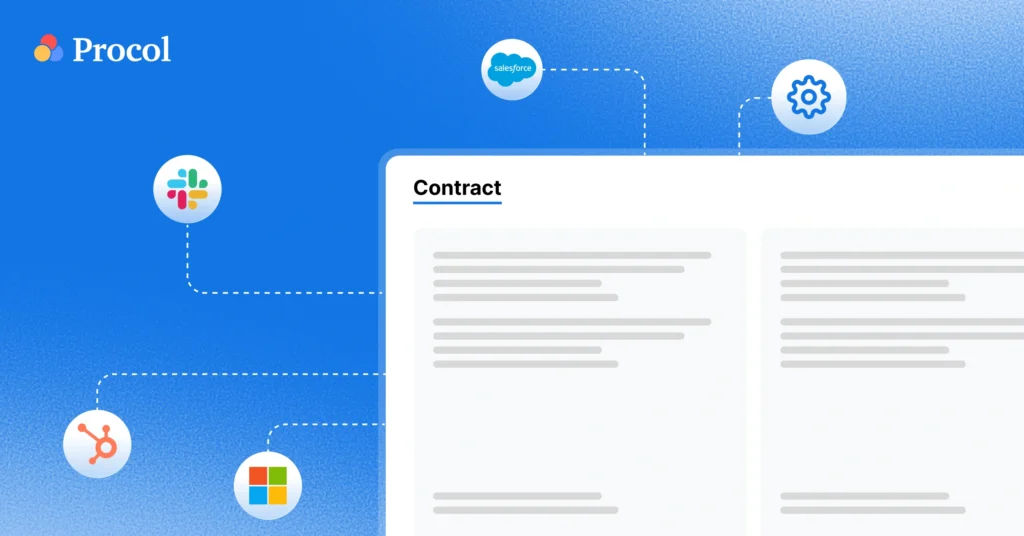
Contract lifecycle management software is vital for procurement teams, as it helps them handle contracts more efficiently and keep track of all business discussions throughout their lifecycle. This process, done manually, can be error-prone, inaccurate, and confusing. An article by Loio states that poor contract management can reduce contract value by 40%. However, automation solves that problem. Most of the procurement world is shifting to CLM automation, evident by the market projection of between $3.24 billion and $8.6 billion by 2030.
The time to change is now, and this blog helps you understand why it’s so important, with a list of the top tools in the industry, key tips, and best practices.
Key Takeaways
What is contract lifecycle management software?
Contract lifecycle management software cloud-based digital platform that automates, centralizes, and manages the entire contract lifespan. It helps procurement teams manage the entire contract lifecycle, from request and creation through execution, renewal, and compliance. A modern CLM software centralizes contracts, automates workflows, and improves visibility, making it a critical contract lifecycle component for enterprise procurement leaders.

Why is contract lifecycle management software important for modern procurement?
Contract lifecycle management software is important for procurement leaders as it automates manual tasks, enhances compliance, reduces financial risks, and boosts operational efficiency. This automation shortens contract cycle times, improves regulatory compliance, and reduces exposure to legal and commercial risks. Additionally, a modern CLM platform also provides a centralized view of all contracts, making it easier for leaders to track obligations and performance.
As the contract lifecycle management software market continues to evolve, organizations are adopting CLM software to gain better control, consistency, and visibility across the entire procurement process. For CXOs, the right system enables faster decisions, stronger governance, and more predictable outcomes from every contract.
What are the key features a contract lifecycle management tool should have?
The best contract lifecycle management tool supports the entire contracting process, from creation to renewal. The most important features these systems should have include a centralized, secure repository for storage and easy access, automated approval workflows, native e-signatures, AI-powered analytics, version control, audit trails, automated alerts for compliance, and strong integration capabilities. Together, these features help organizations reduce risk, improve efficiency, and maintain visibility across all contracts. Let’s learn more about what they are.
1. Centralized contract repository
A designated and centralized library to store all contracts helps keep information secure, eliminating scattered files and manual tracking. In fact, an article by AWS emphasizes the shift from basic contract storage facilities to platforms that combine process automation with AI contract intelligence, allowing teams to access agreements quickly, manage versions, link related documents, and maintain audit trails. Additionally, metadata and tagging improve visibility, reduce risk, and make contract governance more efficient.
2. Contract creation, templates, and clause libraries
Contract lifecycle management software simplifies the workload and enables faster drafting through standardized templates and clause libraries. These features are greatly helpful for teams and even increase productivity and compliance. They also help maintain consistency and reduce the dependency on legal teams for routine agreements. Pre-approved language helps organizations scale contract creation without increasing risk or errors.
3. Automated review, approval, and workflow management
After drafting a contract, it must be thoroughly reviewed. Automated workflows enable teams to set stages for review and assign them to the right stakeholders based on customized rules. A well-designed contract lifecycle management system speeds up the approval cycle by reducing delays and manual follow-ups, ensuring contracts meet internal policies.
4. AI-powered contract capabilities
AI features in a contract management system help draft, review, and analyze contracts by identifying clauses, risks, and obligations. An article by Concord states that AI reduces the average contract review time from 92 minutes to just a few minutes. So, what would take teams hours or days to do, the best contract lifecycle management software uses AI to digitize legacy contracts, extract data, and generate insights that support smarter decision-making.
5. Advanced search, reporting, and contract intelligence
A CMS must help you find what you need when you need it. A powerful search capability allows users to find contracts using metadata or full-text search, including scanned documents. Reporting and analytics provide insights into contract status, value, risks, renewals, and cycle times, helping procurement and legal teams track performance and optimize outcomes.
6. E-signatures and real-time status tracking
Built-in e-signature capabilities speed up contract execution by allowing documents to be signed from anywhere. Real-time tracking shows where contracts are in the approval or signing process, enabling faster follow-ups and reducing delays in closing agreements.
7. Integrations with business systems
Contract lifecycle management software should integrate with CRM, ERP, procurement, and document tools. An integrated procurement system reduces duplicate data entry, improves accuracy, and ensures contract data flows smoothly across systems, supporting adoption and operational efficiency across teams.
8. Security, compliance, and audit controls
Contracts contain sensitive information, making security essential. Leading contract lifecycle management companies offer role-based access, encryption, multi-factor authentication, and detailed audit trails. These controls help organizations stay compliant while protecting contract data throughout its lifecycle.
9. Renewal, expiry, and obligation management
Automated alerts notify teams of upcoming renewals, expirations, and key obligations. This prevents missed deadlines, unplanned auto-renewals, and revenue leakage, while ensuring continuity and better contract value management.
10. Collaboration, usability, and mobile access
Collaboration tools allow multiple stakeholders to review, comment, and edit contracts in real time. Mobile access ensures users can review and approve contracts on the go, which is an important factor when evaluating options in a contract lifecycle management software comparison.
Benefits of using contract lifecycle management software
Introducing automation to business processes offers numerous benefits, including in contract lifecycle management. According to Goldman Sachs, automated contract management can speed up negotiations by 50%, reduce payment errors by 75-90%, and lower management costs by 10-30%. Automating and standardizing processes enhances business efficiency, legal compliance, profitability, and collaboration while speeding up negotiations and centralizing contract storage for easy access.
1. Faster, more responsive business decisions
A streamlined approach to storing contracts provides you with a clearer view when it’s time to address important business issues. A contract lifecycle management tool provides real-time visibility into contract status, enabling quicker responses to business needs and better decision-making.
2. Legal teams can focus on higher-value work
Lawyers, being problem solvers by nature, require a structured approach to aid them in their work. Automating routine tasks like drafting and approval workflows frees legal staff to focus on strategic, high-value work, improving efficiency and job satisfaction.
3. Manage growing contract volumes efficiently
As businesses scale, the volume and complexity of legal agreements increase as well. CLM platforms help handle increasing contract volumes by automating routine contracts and simplifying complex processes.
4. AI-powered risk reduction and faster reviews
AI-driven features in CLM software help in providing sound assessments and analyses of contracts. They highlight risks, red flags, and notify teams of key terms needing review. This reduces errors and speeds up contract reviews, enabling legal teams to save time while mitigating risks.
5. Standardized contracts and reduced errors
Consistent processes help achieve successful business operations. Organizations should be able to map and track each step, adding workflows and automation when appropriate. By using pre-approved templates and automated data entry, CLM platforms minimize the risk of human error, ensuring consistent and accurate contract creation every time.
6. Enhanced cross-team collaboration
CLM systems enhance visibility and align legal, sales, procurement, and finance teams using shared access and a centralized database. Standardized workflows keep processes consistent and eliminate the need for multiple contract versions, speeding up the overall source-to-pay process.
7. Improved revenue generation and sales cycles
With CLM tools, sales teams can create contracts independently using templates, reducing legal bottlenecks and accelerating sales cycles, leading to faster revenue generation.
8. Cost savings through automation
By automating manual tasks like contract creation, approvals, and reporting, CLM software lowers administrative costs and boosts overall efficiency. This enables staff to focus on more strategic activities rather than on time-consuming tasks like document management. Additionally, automation removes the need for adding headcount, another contributing factor to reduced costs.
Who needs contract lifecycle management software?
If you’re debating whether your team needs CLM automation as of yet, let’s paint a picture. You’re ready for a CLM platform if you struggle with missed renewals, disorganized contracts, outdated tracking, or manual updates. CLM software can be used by mid to large enterprises, fast-growing companies, and industries that manage complex contracts in high volumes. It benefits legal, commercial, and other teams by enhancing contract processes and improving efficiency across the organization. Here are the various teams and procurement stakeholders who need a contract lifecycle management tool.
1. Legal operations teams
Legal teams use CLM software to simplify contracting and enable self-service for routine agreements. Automating standard contracts within controlled guardrails frees them from administrative tasks. Therefore, this allows legal professionals to focus on strategic projects and complex negotiations.
2. Procurement teams
CLM platforms are useful for procurement teams as they can negotiate better supplier terms and manage complex vendor relationships with each. A strong CLM process helps control spend, track performance, and ensure negotiated savings are realized. It also ensures compliance with procurement policies.
3. Sales and customer success teams
Sales teams use CLM software to generate and execute agreements faster within their CRM, which enables them to close deals easily and reduce disruptions. Customer success teams leverage CLM to manage client agreements, conduct due diligence, monitor compliance, and track key renewal dates, strengthening long-term relationships.
4. Finance and operations teams
Finance teams use contract lifecycle management systems to maintain contract visibility and minimize revenue leakage. Yahoo Finance notes that approximately 60% of organizations use CLM systems to reduce annual contract-related losses by 2-4%. They track contract values, monitor obligations, manage renewals, and ensure accurate revenue recognition.
5. Human resources departments
HR teams automate routine workflows with CLM software, from generating offer letters to updating employee agreements at scale. A contract lifecycle management tool ensures employment law compliance and streamlines onboarding processes.
6. IT and technology teams
IT departments need CLM platforms that integrate seamlessly with enterprise systems and scale with business growth. They seek contract lifecycle management companies offering robust APIs, enterprise-grade security, and easy deployment.
7. Senior executives and business leaders
C-suite executives require strategic visibility into contractual obligations, risks, and opportunities. When evaluating a CLM software list, executives look for solutions providing real-time dashboards, analytics, and insights that inform strategic decisions and demonstrate measurable ROI.
10 best contract lifecycle management software in 2026
The best CLM software depends on your organization’s needs and the complexity of your legal processes. However, we have compiled some of the top picks on this CLM software list. Which include industry-renowned names such as Procol (end-to-end contract lifecycle management automation), Ironclad (collaboration-focused), DocuSign CLM (e-signature integration), Icertis (enterprise governance), Agiloft (flexible, cost-effective), and Juro (self-serve features for legal/business teams). Here’s a detailed introduction to each of these software so you can choose one that best fits your requirements.
1. Procol
Procol offers contract lifecycle management automation designed for growing enterprises seeking to simplify, automate, and enhance procurement and contract processes. It has deep integration abilities with multiple business tools such as ERP, CRM, and other systems, providing real-time insights and enhancing contract visibility across teams.
Key features:
- End-to-end automation for procurement and contract management.
- Seamless integration with ERP, CRM, and other business systems.
- AI-powered contract analytics and performance tracking.
Pros:
- Streamlined procurement processes with centralized contract management.
- Real-time insights into contract performance and supplier compliance.
- Enhances contract visibility and reporting across teams.
2. Summize
Summize is a highly intuitive CLM solution that simplifies contract workflows by embedding directly into tools your business already uses, like Outlook, Teams, and Salesforce. It empowers teams to create contracts quickly and allows legal teams to automate key tasks using AI.
Key features:
- AI-powered contract reviews and automated workflows.
- Integration with popular tools like Outlook, Teams, and Salesforce.
- Self-serve contracting for business users.
Pros:
- Quick implementation and ease of use.
- Reduces manual contract management tasks, saving time for legal teams.
- Fast time-to-value, often within 4 weeks.
Cons:
- May have limited search options.
- May have a steep learning curve.
3. Juro
Juro is an AI-driven contract management platform ideal for in-house legal teams, HR, and sales departments. It offers a central repository for contracts, along with easy-to-use automation tools to help businesses manage their contracts more effectively.
Key features:
- AI-driven contract creation, negotiation, and management.
- Central, searchable contract repository.
- Customizable workflows for legal teams.
Pros:
- User-friendly design and strong collaboration tools.
- Ideal for in-house legal teams, sales, and HR.
- Streamlines the contract process with ease of use.
Cons:
- Workflow setup might be challenging.
- Data extraction sometimes lacks in-depth insights.
4. Ironclad
Ironclad is a cloud-based CLM platform that makes contract creation, approval, and storage more efficient. Its platform is able to manage various contract types and provides powerful analytics, making it ideal for larger enterprises with complex contracts requiring cross-department collaboration.
Key features:
- Cloud-based contract creation, redlining, and storage.
- AI-powered analytics and clause extraction.
- Integrates with CRM, signature, and collaboration tools.
Pros:
- Intuitive user interface and powerful workflow automation.
- Strong contract analytics and risk assessment tools.
- Highly customizable for large enterprises.
Cons:
- Can be expensive for smaller teams.
- High-level training materials may not be sufficient for some users.
5. Agiloft CLM
Agiloft has been described as a platform that handles the complete contractual lifecycle. It offers a flexible, no-code CLM platform designed to improve contract management across purchasing, legal operations, and sales cycles. The software uses AI to enhance contract processes and minimize procurement compliance risks.
Key features:
- Flexible, no-code platform for easy customization.
- AI-powered tools to enhance contract management and compliance.
- Quick deployment and easy integration with other business systems.
Pros:
- Highly customizable to meet specific business needs.
- Suitable for legal, procurement, and sales departments.
- Strong AI capabilities for improving compliance and reducing risks.
Cons:
- May have limited customizations.
- Can be complex to configure initially.
6. Kira Systems
Kira Systems offers advanced machine learning for contract analysis, making it an excellent choice for legal teams handling complex contracts. It excels at extracting and analyzing data from contracts, which helps teams assess risks and opportunities.
Key features:
- Advanced machine learning for contract content extraction and analysis.
- Good search capabilities for contract documents.
- Strong project management functionality for legal teams.
Pros:
- Excellent at extracting and analyzing contract data.
- Great for large, complex contracts.
- Offers deep insights and data-driven contract intelligence.
Cons:
- Pricing plans may be expensive.
- AI capabilities may still be developing, hence they may lack some advanced features
7. Luminance
Luminance is an AI-powered CLM platform focused on accelerating the contract review process. It offers powerful document analysis, cross-department collaboration, and intuitive search functionality.
Key features:
- AI-powered document analysis and e-discovery capabilities.
- Cross-department access and workflow automation.
- Advanced search and contract review functionality.
Pros:
- Strong document analysis and risk identification.
- Facilitates collaboration across different departments.
- Useful for large-scale contract management and compliance.
Cons:
- Can be challenging to integrate with existing systems.
- AI features can be complex to navigate without training.
8. Concord
Concord is a simple, easy-to-use CLM designed to help businesses manage their entire contract lifecycle in one place. It focuses on providing bulk upload features, version control, and compliance management.
Key features:
- Simplified contract lifecycle management with a focus on compliance.
- Bulk upload and version control features.
- Quick setup and easy onboarding.
Pros:
- Easy to use and quick to implement.
- Good for teams looking for simple contract management solutions.
- Ensures consistent version control and audit trails.
Cons:
- Lacks strong integration capabilities with external tools.
- The user interface is reported to be less intuitive.
9. DocuSign CLM
DocuSign CLM helps organizations automate their contract processes, offering a secure and simple way to manage agreements from creation to execution. It includes e-signature functionality, which makes signing contracts faster and more secure.
Key features:
- E-signature solutions integrated with contract management.
- Automated contract workflows and document tracking.
- Integration with popular business tools.
Pros:
- Strong focus on automation and e-signature functionality.
- Highly trusted and widely adopted in contract management.
- Great integration with business tools like Salesforce.
Cons:
- May have limited customization options.
- May require training to maximize its full potential.
10. Icertis Contract Intelligence (ICI)
Icertis is an AI-powered CLM platform that helps businesses transform their contract management processes. The ICI platform turns contracts from static documents into strategic assets by linking contract data to operational systems, providing actionable insights for better decision-making.
Key features:
- AI-powered contract intelligence for enhanced decision-making.
- Scalable and flexible, supporting millions of contracts.
- Global contract support with multi-language capabilities.
Pros:
- Excellent at turning contracts into valuable data assets.
- Scalable solution ideal for global organizations.
- Strong AI-driven insights for compliance and performance monitoring.
Cons:
- Implementation can be complex and time-consuming.
- Some users report challenges with configuration and customization.
How to choose the right contract lifecycle management software
CLM automation in today’s day and age is taking center stage. Many articles survey that 94% of professionals believe that generative AI can enhance risk and compliance analysis, and 38-44% are already leveraging AI to extract metadata and analyze contract clauses. This is why choosing the right contract lifecycle management software is critical to improve efficiency and stay ahead. It involves assessing organizational needs and pain points, prioritizing user-friendly interfaces, ensuring integration abilities, and strong AI-powered automation for contract drafting and compliance. Here’s a step-by-step guide to selecting the best CLM software.
1. Assess organizational needs
Before you research the contract lifecycle management software market, identify pain points first. These can be slow approvals, scattered contracts, or a lack of visibility. Evaluate contract volume and complexity, whether you handle routine agreements or enterprise-scale contracts. Define essential features such as AI-driven metadata extraction, automated templates, e-signatures, and reporting.
2. Prioritize key features and technology
A centralized, searchable repository is non-negotiable for finding contracts quickly. Streamlined request intake, automated approval workflows, and integrated e-signatures keep processes moving efficiently. Dashboards, audit trails, and intelligent alerts provide control while reducing manual work.
3. Evaluate user experience and integration
The platform must be intuitive to encourage adoption across legal, sales, and procurement teams. Ensure seamless integration with tools like Microsoft Word, Salesforce, and ERP systems so teams can work in familiar environments without losing efficiency.
4. Leverage AI and automation
Modern CLM platforms should assist with routine tasks like data entry, clause extraction, and renewal reminders. AI features help mitigate risks, improve compliance, and accelerate workflows, allowing teams to focus on higher-value activities.
5. Consider security and compliance
Ensure the CLM meets industry standards for regulatory compliance and data privacy. Features like automated alerts, controlled access, and audit trails help maintain governance and reduce risk.
6. Evaluate vendors and support
Choose vendors with fast deployment, responsive support, and a strong reputation. Customer reviews and recognition from analysts such as Gartner or Forrester provide confidence in the platform’s reliability.
7. Analyze total cost and scalability
Consider pricing models, training, and maintenance costs. Ensure the platform scales with your organization’s growth and evolving contract management needs.
8. Features that provide speed and control from day one
Your contract lifecycle management software comparison checklist should have features that optimize the entire contract and procurement lifecycle. The tool you choose should streamline contracts from request to signature, reduce bottlenecks, provide real-time visibility, and support consistent, insight-driven workflows across departments.
8 best practices for implementing a CLM platform
Implementing a CLM platform effectively starts with following best practices. Begin with involving all of your stakeholders, then conduct a phased rollout, integrate seamlessly with your CRM/ERP, leverage AI for clause management, and define clear KPIs to track ROI, like reducing contract cycle times and boosting operational efficiency. Here are the industry best practices you should follow for your CLM software.
1. Phased rollout of your CLM system
A gradual, phased approach ensures your team adapts without overwhelming them. Start with key departments to iron out any potential issues before a company-wide rollout.
Tip: Begin with critical teams such as Legal and Sales for smooth adoption.
2. Integration with existing systems
Make sure the software integrates seamlessly with your existing systems (e.g., CRM, ERP) to streamline your workflows.
Tip: Collaborate with your IT department to ensure smooth data transfer and avoid system disruptions.
3. Leverage AI for clause management
AI can significantly speed up contract creation and reviews by automating the extraction of key clauses and ensuring compliance. Many contract lifecycle management companies now incorporate this to enhance contract quality.
Tip: Use AI tools to auto-suggest edits, track clauses, and ensure contracts align with company standards.
4. Define clear KPIs for ROI
Set measurable KPIs such as reducing contract cycle times, increasing deal closure rates, and improving compliance tracking to monitor the success of your contract lifecycle management tool.
Tip: Regularly assess the effectiveness of your system using these KPIs to optimize the contract lifecycle management process.
5. Centralized digital repository
A centralized, searchable repository is critical for tracking and managing contracts across departments. The contract lifecycle management process is streamlined when all contract data is easily accessible in one location.
Tip: Store all contracts in a secure, cloud-based platform to ensure quick access and better compliance control.
6. Standardize contract authoring
Standardize contracts with templates and pre-approved clauses. This reduces errors and makes contract creation faster and more consistent. Many contract lifecycle management companies offer customizable templates to simplify this process.
Tip: Use your CLM tool’s clause library to automatically insert pre-approved language.
7. Automate repetitive tasks
Automate repetitive contract tasks such as approval workflows and renewal reminders. This not only saves time but also minimizes human error in the contract lifecycle management process.
Tip: Use AI and automation features to track key dates, approvals, and document statuses to keep contracts on track.
8. Evaluate and optimize for long-term success
Ongoing optimization of the contract lifecycle management process is key. Use metrics such as contract cycle time, negotiation speed, and compliance rates to evaluate success and continuously refine processes.
Tip: Set procurement KPIs for contract performance and regularly compare them to benchmarks. Use AI-driven insights to identify improvements and optimize workflows.
Empower your contract management process with Procol AI
Procol brings intelligent automation and actionable insights to your contract management process, helping teams work faster, smarter, and with fewer errors. We provide a centralized and easily-navigable repository where contracts can be easily stored and accessed. Additionally, by analyzing contracts in real time, Procol AI highlights risks, flags key clauses, and suggests next steps, reducing manual review time and improving accuracy.
Teams across legal, procurement, and finance can leverage AI-driven recommendations to streamline approvals, track obligations, and monitor compliance without leaving their existing systems. With Procol, organizations gain clear visibility into contract data, uncover hidden opportunities, and make informed decisions, empowering a contract management process that is efficient, transparent, and insight-driven from start to finish.

Conclusion
Embracing contract lifecycle management software can transform your procurement operations, enhancing speed, accuracy, and compliance. This blog emphasized how, with features like AI-driven analytics, centralized repositories, and seamless integration, the right CLM tool empowers your team to manage contracts efficiently and make informed decisions, driving business success.
Frequently asked questions
What makes contract lifecycle management software essential for modern procurement?
CLM software automates contract workflows, improves visibility, reduces risk, and ensures better compliance across procurement operations, helping teams work faster and with greater control.
How does CLM software support contract risk management?
It uses automation and AI to flag risky clauses, track obligations, and ensure compliance, helping organizations avoid financial losses and legal issues.
Why is AI important in contract lifecycle management tools?
AI speeds up contract review, extracts key data, reduces manual work, and provides insights that improve accuracy and decision-making.
Can CLM software improve collaboration between teams?
Yes, CLM platforms centralize contracts and workflows, enabling legal, procurement, sales, and finance teams to collaborate without delays or version confusion.
How should businesses choose the right CLM software?
Businesses should evaluate contract volume, integration needs, ease of use, AI capabilities, security, and scalability before selecting a solution.
What challenges do organizations face when implementing CLM software?
Common challenges include user adoption, system integration, and data migration, which can be addressed with phased rollouts and proper training.
How does CLM software help manage renewals and expirations?
CLM tools automate alerts for renewals and key deadlines, helping teams stay proactive and avoid missed opportunities or unwanted renewals.
Schedule a Demo
We’d love to hear from you. Please give us a call on +1 315-645-2799.
Explore more from Procol
Discover expert tips, how-to guides, industry insights, and the latest procurement trends.
Procurement orchestration: All you need to know in 2026
Explore the value of procurement orchestration, how it works, its benefits,...
Top 22 spend management KPIs to optimize procurement in 2026
Today’s business world has moved from just ‘buying’ to ‘managing spend’...

What is supplier diversity and why is it important?
In the modern corporate competitive world, where both market resilience and...