





What is the procurement process? Definition, types & steps (2026)

Last update: March 5, 2026
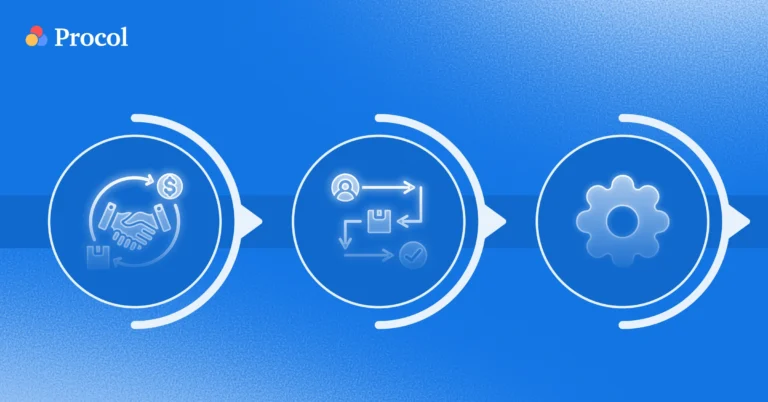
Every business seeks ways to boost profitability. Here’s where a strategic and AI-powered procurement process is key. Research shows that organizations using procurement automation see a 10-15% increase in productivity and a 200-300% ROI within the first year. Therefore, a smooth procurement flow leads to faster cycle times, reduced costs, and better productivity, perfect for long-term and sustainable success.
This blog will explain the importance of an efficient procurement and purchasing process, the various stages, and how modern procurement automation can replace outdated methods and unlock new efficiencies.
Key Takeaways
What is procurement?
Procurement is the strategic, end-to-end process of acquiring goods and services needed for business operations. This involves efficiently sourcing, buying, and managing the necessary goods, going beyond simple purchasing operations to include supplier selection, contract negotiation, planning, payment, and relationship management. The goal is to invest in top-quality, cost-efficient supplies that provide the best value for the business. This comprehensive approach ensures a streamlined and effective procurement strategy.

What is the procurement process?
The procurement process involves acquiring goods and services that an organization needs in order to make its end product or to function effectively. This is a systematic approach and encompasses the end-to-end journey of finding these goods and services. The aim of this process is to save costs and time and build strong supplier relationships. Procurement teams approach this in a structured manner, using careful consideration, as it involves various activities like identifying business needs, selecting suppliers, negotiating contracts, and processing payments.
Expanding further, in this process, after needs identification comes specification of requirements, which is usually when purchase requisitions (PRs) are created. Once those have been sent out, ideal suppliers are identified, and bids or proposals are drafted. Then, once suppliers are selected, the process moves to evaluation and selection, contract negotiation, and purchase order management.
After the goods and services have been successfully delivered, payment processing and record-keeping ensure the process closes smoothly. Furthermore, supplier performance evaluation also plays a crucial role in maintaining long-term and mutually beneficial relationships.
It is also important to keep in mind that the process of procuring goods and services is unique to each organization. What is common for every organization and process, though, is that getting the best value remains the top priority. The quality of goods should be top-notch, and they should be delivered on time, with a focus on minimizing costs and risk while maximizing operational efficiency.
How procurement works
The acquisition process is a strategic one that is only truly successful when carried out with extreme precision and attention to detail. During this process, teams work to obtain goods of the highest quality while also keeping in mind that they remain cost-effective and that operations remain compliant. The procurement process flow begins with identifying business requirements and forecasting demand, followed by sourcing and evaluating suitable suppliers. Additionally, depending on the organization’s size, procurement can be handled by a single individual or have an entire team assigned to it that collaborates with multiple departments to define specs and budgets.
The procurement lifecycle, at a high level, typically includes these steps:
- Identifying the goods or services needed
- Sourcing suppliers, requesting quotes, and filling out PRs
- Negotiating contract terms, price, and delivery timelines with suppliers
- Placing orders, receiving them, and carrying out the final payment
- Evaluating supplier performance and maintaining documentation
Furthermore, once you understand that procurement is a connected process, and therefore can’t be done when processes are isolated from one another, you will be able to map out your plan of action better. This ongoing cycle focuses on forming long-term supplier relationships, conducting quality checks, and reviewing performance to secure better value over time. In addition to this, competitive bidding is another procurement method that involves inviting multiple suppliers to submit proposals or bid for a service. This is often used for high-value or complex purchases, where fairness, transparency, and informed decision-making are non-negotiables.
Why is procurement important for a business?
Procurement is crucial for businesses as it ensures the company acquires the right goods and services at the most favourable price. Cost-effectiveness directly impacts profitability, minimizes financial risks, ensures quality, and supports strategic goals like sustainability and innovation. For its day-to-day functioning, a business needs raw materials for product creation, software to simplify tasks, or services to keep things running. A structured sourcing approach helps businesses minimize risk, analyze the places to allocate resources, create realistic budgets, and save on costs. Maverick spending, which accounts for 10-20% of loss for businesses, can also be controlled.
However, beyond cost control, procurement plays a very important role in managing financial risks and ensuring the company secures goods and services that meet the required quality and supplier reliability. Whether the procurement strategy involves delivering low-cost products or high-quality offerings, this process helps find suppliers that match these objectives.
For example, a company facing challenges with competitive pricing, vendor management, and opaque procurement processes turned to Procol’s strategic sourcing solution. By centralizing operations and using the eAuction Pro module, they achieved more than 5% savings on a₹50 Cr spend, streamlined tasks with a mobile app, and diversified their vendor base, unlocking category-specific savings.
Procurement also plays a key role in aligning with a company’s sustainability and ethical values. It ensures that all sourcing decisions meet environmental, social, and governance (ESG) commitments. By managing sustainable sourcing and compliance, procurement helps mitigate risks and protect the company’s reputation, leading to the elimination of unnecessary expenses.
What are the types of procurement?
Procurement processes can be classified into several types, with each of them serving a specific function and fulfilling a particular business need. The main types of procurement are direct (raw materials for products), indirect (daily business operations), goods (tangible items), and services (third-party expertise). Here’s each of them explained.
1. Direct procurement
Direct procurement refers to the acquisition of raw materials required for the end product. These materials contribute directly to the company’s finished product. This type of procurement impacts product quality, revenue, and profit margins, meaning it is strategically managed due to its effect on core business activities. Examples of this procurement method include raw materials, components, machinery, and services incorporated into finished products.
2. Indirect procurement
Indirect procurement typically involves goods and services that support day-to-day operations but don’t directly impact the final product. These materials are not part of the output. These goods include office supplies, utilities, and services are marketing and software, to name a few. Remember that even though they aren’t very critical to the end product, they still play a pivotal role in operational efficiency in a business.
3. Goods procurement
Obtaining goods in the procurement process refers to the acquisition of physical items. These can range from raw materials and office equipment to wholesale products and software subscriptions. This category is quite vast, so it’s often confused with direct and indirect procurement, but it does differ. Careful management of quality, cost, and inventory helps avoid supply chain disruptions.
4. Services procurement
This area of procurement is more “people-focused.” In services procurement, the focus is on external expertise that helps in managing business operations. Because each company has different needs, the purchasing process may be unique, but it mainly consists of consultants, IT support, marketing agencies, legal services, and outsourced or contingent labor. Contracts need a clearly defined scope, service levels, and performance metrics. The nature of the services procured can either be direct or indirect, depending on whether they contribute to the end product.
| Type of procurement | What is it? | Examples |
| Direct procurement | Acquiring goods and services that directly impact a business’s end product | Chips, processors, screens, machinery, wholesale goods |
| Indirect procurement | Acquiring and buying supplies, products, or services for everyday business operations | CRM software, office supplies, utilities, marketing services |
| Goods procurement | Purchasing physical products that a company needs to operate | Raw materials for manufacturing, food ingredients, office equipment, software subscriptions |
| Services procurement | It includes engaging consulting services to fulfill organizational requirements | Marketing consultants, IT support, legal services, cleaning contractors |
Direct vs. indirect procurement
When talking about direct and indirect procurement, understand that they are two key categories of purchasing within a business. Direct procurement refers to obtaining the raw materials, components, or labour through a contract that is directly incorporated into a company’s core output. Because these purchases influence the quality of products, timelines, and revenue, they have to be managed strategically and must be aligned with production forecasts. On the other hand, indirect procurement supports internal operations rather than the final product itself. While indirect purchases don’t affect production directly, managing them well helps improve efficiency, control costs, and reduce fragmented or unmanaged spending.
Goods vs. services procurement
Goods and services procurement can be distinguished by the nature of what is being sourced. For example, goods procurement involves purchasing tangible items such as raw materials, equipment, inventory, and operational supplies. These purchases, much like direct procurement, also require careful planning around quantities, storage, delivery schedules, and inventory levels. Services procurement focuses on sourcing external expertise or labour, which includes consulting, IT support, marketing services, and facilities management. Additionally, unlike goods, service agreements are formed by scopes of work and performance expectations.
What are the 3 P’s of procurement?
The 3 Ps of procurement, also known as the components of procurement, are People, Process, and Paperwork. These three elements are the foundation of a streamlined purchasing system. They each impact the procure-to-pay cycle differently, and each has meaningful contributions. One without the other is incomplete and results in a fragmented procurement process. People manage relationships, Process defines the steps, and Paperwork keeps the other two elements secure, ensuring control and compliance. Together, they create a framework that results in efficiency and success. Let’s see how each of these components contributes to procurement.
1. People
This component of the procurement process is accountable for starting and authorizing the procurement process steps. It includes procurement professionals, stakeholders from various departments, and accounts payable personnel. The people involved depend on the value of the goods or services being procured. In order for the supply chain to work effectively, the people involved need to be familiar with their roles and responsibilities, which can be done with a clear structure and roles. Next, there needs to be ongoing training and development, which helps the team stay agile. They should be aware of industry trends, procurement best practices, and the latest technology. Lastly, all procurement stakeholders, like finance, legal, and operations, should be aligned with the company’s objectives to keep processes running smoothly.
2. Process
The process is key in cutting costs and ensuring supplies arrive on time. A well-crafted, standardized, and step-by-step approach boosts precision and punctuality by clearly defining tasks and deadlines for everyone involved. This helps avoid inefficiencies and mistakes that can impact profits or strain ties with suppliers. Performance should also be regularly measured using procurement KPIs. They help in highlighting where your process needs improvement and help you get better. Additionally, including clear guidelines and policies ensures that all activities are ethical and that automation has approved safeguards. Being legally compliant is key to a long-term and sustainable procurement strategy.
3. Paperwork
Detailed physical or electronic records are essential at every procurement process step. These records are a repository of organizational knowledge about payment terms and supplier performance. They also provide a clear audit trail in case of disputes or audits, allowing businesses to easily track each step of the procurement process cycle. Contract management is an important aspect of documentation; you should have a centralized repository where all contracts can be stored and easily edited. Data management also plays a vital role. Systems help organize procurement data for easier access, decision-making, and analysis.
12 steps involved in the procurement process
The sourcing and procurement process involves various key steps, all of which play a critical role in ensuring that the process remains structured and the source-to-pay process is not interrupted by delays. These steps include needs identification, supplier research and selection, requesting quotes (RFQs), negotiating, crafting purchase orders (POs), receiving and inspecting the goods, invoice processing, payment, performance review, and documentation. Following these steps helps organizations achieve a strategic acquisition process. Let’s dive into what these procurement process steps are.
1. Needs identification for goods and services
Figure out what goods and services are required by the company. This step involves assessing your needs in detail, so that you can discover the items you require with accuracy and prepare a proper purchase request. Operations in this step may also include buying an item that the organization has never bought before or restocking on goods. At this stage, you should consult all the departments in your business to accurately meet their needs. Additionally, this stage may also require demand planning and forecasting to plan future requirements.
2. Purchase request submission
A purchase request (PR) is needed when an employee needs to procure a significant quantity of materials. It is a formal documentation of the specific requirements of each department. After identifying the requirements, make an official request for the goods or services required to initiate the process. The PR comprises key details such as price, the time frame in which the goods or services are needed, and quantity.
3. Purchase request review
Once it is submitted, the PR must be reviewed. The relevant stakeholders must check and approve the purchase request, ensuring enough money is in the budget. During the review stage, managers review the requisition package and also double-check whether there is a genuine need for the aforementioned goods or services to avoid unnecessary spending. Once the PR is approved, it becomes a purchase order (PO). If PRs are rejected, they may be sent back with feedback to correct specifications, pricing, or quantities.
4. Supplier evaluation and selection
In this step, the procurement team assesses and picks vendors based on company needs, looking at quality, cost, delivery times, and the supplier’s past performance. Once the desired suppliers are identified, the purchasing team needs to send what is called an RFQ, or a request for quotation, wherein the supplier will send back quotes for the necessary items. The RFQ should be as detailed as possible to compare vendors properly based on cost, reputation, speed, quality, and reliability. An e-auction is also held to select the best supplier.
5. Negotiation
Once the best fit for the organization is chosen, procurement negotiation commences. In this stage, the procurement team negotiates a contract, picks one that fits the budget, and discusses contract details. Evaluate each quote carefully to ensure you’re getting the best price. Also discuss other details such as price, quantity, delivery times, and payment terms.
6. Order management
The procurement experts then send a purchase order form to the chosen supplier and track the delivery. The PO should be significantly detailed so that the supplier may be able to identify the exact requirements and fulfill those. Once the supplier delivers the goods, they are checked by the purchaser for any issues.
7. Receive the delivered goods
After the vendor delivers the goods or services, the next step is checking the items to ensure everything matches what was ordered. During this process, the procurement team conducts a thorough inspection of the goods to ensure that no goods fall short or that the quality of the goods is intact. Ensure that the documents that you receive from the supplier are accurate.
8. Cross-check documents for payment
During this process, accounts payable cross-checks documents such as the PO, goods receipt note (GRN), and the supplier’s invoice to check if the goods received match what was requested. This step prevents unauthorized payments. This process can be done manually, but using accounts payable automation software simplifies the process and flags discrepancies automatically.
9. Pay the suppliers
Once everything is reviewed in depth, the company sends the payment to the vendor as agreed in the contract terms. Use the AP software to process the invoice on time to ensure that vendors are paid consistently and relationships remain pleasant. This prevents late fees and can even prompt the supplier to give you early payment discounts.
10. Record keeping
The procurement team will keep all necessary papers from purchase requests to approved bills in one place to help with audits. Keeping these documents is helpful for multiple reasons, such as reordering in the future and conducting audits. Clear records stored in a centralized location are easily accessible and come in handy at the time of disputes.
11. Supplier management and review
The final step in the purchasing process is ongoing. Continuously monitor supplier performance, manage contracts, assess risks, and review various procurement KPIs to identify cost-saving opportunities. A continuous review process helps identify and resolve inefficiencies immediately and ensures supplier relationships always remain healthy.
What are the stages of procurement?
The procurement process cycle broadly consists of these stages: identifying a need, sourcing the right suppliers, requesting quotes/proposals, evaluating offers, negotiating contracts, creating purchase orders, receiving/inspecting goods, processing invoices and payments, and managing the ongoing supplier relationship. However, it can be grouped into three main stages that reflect how procurement works in practice. Here they are.
- Sourcing stage: This stage is where the business recognizes it has a need for particular goods/services. It involves researching suppliers, requesting quotes in the form of RFQs or RFPs, and evaluating supplier responses. It’s also about establishing strong relationships with suppliers, which helps improve products, processes, and mutual trust over time.
- Purchasing stage: Once suppliers are selected, this stage covers negotiating pricing and terms, creating purchase orders, and receiving and inspecting the goods or services to ensure they meet the required specifications.
- Payment stage: During this final stage, accounts payable verifies the accuracy of the invoice via three-way matching. Then, once all documents are matched, the payment is approved, and the transaction is processed. Careful record-keeping is essential for audits and compliance, while the ongoing relationship with the supplier is managed to ensure continuous performance and improvement.
What is the procurement lifecycle?
The procurement lifecycle is the end-to-end process of obtaining goods and services. It starts with recognizing a need, moving to selecting suppliers, negotiating contracts, ordering, delivery, and payment. All of these stages are interconnected. They rely on each other to form a successful procurement process. These stages overlap with one another automatically, meaning they cannot function without the other.
Together, these procurement process steps strive to deliver the optimum result for businesses. An efficient procurement lifecycle ensures that the process is both cost-effective and timely, contributing to business efficiency. This becomes more important for industries where timely supply delivery directly impacts customer satisfaction, such as in e-commerce or manufacturing. Additionally, a well-managed lifecycle helps streamline workflows, improve supplier relationships, and maintain compliance with company policies and budgets.
Moreover, the procurement lifecycle is not always linear. This means that adjustments are often necessary to adapt to evolving supply chain dynamics, like changing supplier availability or fluctuating costs.
Common principles of procurement
Successful procurement relies on a set of guiding principles that help organizations bring efficiency, fairness, and value to the acquisition of goods and services. The most common yet absolutely essential principles of procurement are: achieving value for money, ensuring fairness and competition, maintaining transparency, and upholding accountability. Together, these fundamentals provide a solid framework for decision-making, compliance, and ethical conduct. Here are the 8 key procurement principles.
1. Value for money
The process of procuring goods and services must extract the most benefit from expenditures. The organization must manage funds intelligently and efficiently, which involves evaluating costs, quality, durability, and potential long-term benefits. Also note that the focus should mainly be on ensuring the purchase delivers the best return rather than the lowest price. Additionally, life-cycle costs and strategic objectives, including environmental and social benefits, are considered. This principle should inspire the selection of the strategy that most suitably aligns with the organization’s goals.
2. Fairness & competition
Procurement should be an equal playing field for all suppliers. Everyone should get a fair opportunity to compete. Procurement processes should be rid of favouritism, bias, or self-interest. All potential suppliers should be treated as equals, as effective competition allows multiple independent suppliers to bid for contracts. This poses as a benefit for organizations as well, as it opens doors for better pricing, quality, and innovation.
3. Transparency
Procurement should be open and clear for everyone involved. All stakeholders should receive timely information and knowledge about processes, and they should always be included in all key decisions. Sensitive details should remain confidential only for legal reasons and should not be withheld from anyone. A clear and transparent system maintains trust, enables smooth audits, and allows stakeholders to feel valued.
4. Integrity
In any business space, it’s vital that professionals conduct themselves ethically. In procurement, this is even more important as teams are dealing with third parties and external clients, which makes fair conduct crucial. Procurement professionals must act honestly and reliably, as this ensures that all actions are guided by sound moral principles and in the best interest of the organization.
5. Accountability
Everyone in the purchasing process should take ownership of their decisions. All individuals are responsible for their actions and outcomes. Responsibilities have been entrusted to particular individuals with the expectation that they be completed diligently, and procurement professionals must live up to this. This includes proper documentation, reporting, and adherence to policies. This enables every step to be audited and justified.
6. Efficiency & effectiveness
Procurement should function in a timely and well-organized manner to reduce waste, delays, and errors. Processes must also be carried out in a way that not only guarantees a good deal but also aligns with broader organizational goals, achieving operational and strategic outcomes efficiently.
7. Consistency & legality
Procurement policies and procedures should be applied consistently across the organization, ensuring all activities comply with legal and regulatory requirements. This helps maintain fairness, reduces risk, and strengthens supplier relationships.
8. Responsiveness & integration
The procurement process flow should be proactive and strive to meet the needs of the organization and its stakeholders, integrating with larger business objectives. This makes sure that procurement supports commercial, social, and operational goals while remaining adaptable to changing demands.
What are the challenges in procurement?
Conducting procurement with efficiency is not an easy task. Even if you think your processes are unbreakable, there can be some surprises along the way that disrupt them. These come in many forms, such as supply chain risks, cost inflation, data visibility, process inefficiencies, contract management, and more. Here are the key challenges explained.
1. Supplier management
Supplier management focuses on building relationships for reliable, cost-effective goods and services. It includes performance monitoring, quality assurance, and contract management. Complexity grows with scale, balancing multiple relationships across regions. There is more to vendor management, like managing a fragmented supplier base, handling underperforming vendors, and mitigating supply risks from geopolitical disruptions, natural disasters, or supplier insolvency.
2. Contract management
Contract management involves negotiating terms and ensuring compliance. It helps maintain good relationships and avoid legal disputes. In contract management, there can be issues with regulatory compliance, vendor adherence to agreed terms, and the risk of contractual penalties or disputes.
3. Inflation and cost management
Inflation increases costs, eroding profit margins and disrupting budgets. Managing it requires long-term contracts, diverse supplier bases, and market trend monitoring. Organizations need agile processes to adjust quickly to cost changes. Additionally, maverick spend poses an individual challenge, eating into a significant portion of a business’s total spend. With spending going haywire, it’s hard to tell where the excess is, and balancing quality with cost becomes another issue.
4. Inefficient processes
Outdated, manual procedures waste time and resources. Streamlining these processes is key to reducing costs and improving procurement. A Deloitte Global CPO Survey found that 89% of procurement teams experienced increased errors due to manual vendor management processes. However, vendor management is not the only issue. Manual PR handling, approvals, and invoice processing also slow down the lifecycle.
5. Invisible spend and data accuracy
Invisible spending occurs outside controlled processes, creating gaps in financial planning. The challenge is gaining visibility into all transactions and ensuring policy compliance. Without this, budget overruns and non-compliant purchases can impact an organization’s financial health. If procurement data is not accurate and updated, it can cause information duplication or error-riddled outcomes. Moreover, siloed systems, outdated records, and poor data capture can cause decision-making errors and reduce visibility into overall spend.
6. Communication challenges
A lack of internal communication and vendor proactivity can cause misaligned goals, delayed or incorrect orders, unhealthy supplier relationships, and faults in procurement timelines. To remedy this, establish clear channels of communication and collaborate regularly.
7. Strategic focus and technology adoption
Procurement activities can often lose sight of the main goal and focus too much on the transactional aspect. This leads the spotlight away from strategy and shines it on a cost-first function instead. However, in today’s procurement world, strategy alone is not enough. If teams don’t want to adopt new technologies and resist upskilling themselves, it hinders efficiency and poses the danger of them being left behind in the competitive market.
8. Supply chain disruptions and sustainability
Disruptions from natural disasters, political instability, or supplier failures can cause delays and shortages in the purchasing process. This can also lead to increased costs. Additionally, organizations face challenges in sourcing sustainable and environmentally ethical products.
The difference between procurement, purchasing, and supply chain
People usually mix procurement, purchasing, and supply chain management, but individually, they play a unique role in how businesses function. Purchasing is the transactional act of buying goods, while procurement is the broader, strategic process of sourcing, negotiating, and managing suppliers. Supply Chain Management (SCM) integrates procurement, production, logistics, and distribution, overseeing the entire flow of materials to customers for a seamless end-to-end system. Let’s break down the differences between these three.
- Procurement vs. purchasing: Purchasing is transactional. It focuses on placing orders, managing payments, and ensuring goods and services are obtained exactly when they are needed. Procurement operates a little differently. It is broader and more strategic, covering need identification, supplier evaluation, negotiation, contracting, and long-term supplier relationship management. Procurement is proactive, starting with analyzing business needs, while purchasing is reactive, executing decisions already made.
- Procurement vs. supply chain: Procurement is a sub-category of supply chain management. It concentrates on sourcing, buying, and paying for goods and services. Supply chain management takes an end-to-end view, managing the flow of goods from raw materials through production, logistics, warehousing, distribution, and delivery to customers. While procurement ensures the right suppliers and contracts are in place, supply chain management ensures goods move efficiently from origin to consumption.
| Procurement | Purchasing | Supply chain |
| Procurement encompasses the entire journey of obtaining goods and services, from identifying requirements to overseeing vendor relationships. | Purchasing is a procurement component, mainly dealing with the transactional elements of acquiring goods and services. | Supply chain management looks at the big picture, managing the entire flow of goods from sourcing to final delivery. |
| Focuses on supplier selection, negotiation, and alignment with business goals. | Focuses on purchase orders, payments, and compliance. | Includes planning, manufacturing, logistics, and distribution. |
| Strategic and proactive. | Operational, transactional, and reactive. | End-to-end and cross-functional. |
Who are the personnel involved in the procurement process?
Well-executed procurement process steps have great thinkers and leaders behind their execution. The procurement cycle has a range of personnel working collaboratively to ensure efficient sourcing and purchasing. Some of the key roles include leadership (CPO, Directors), specialists (Buyers, Analysts, Category Managers, Sourcing Specialists), and cross-functional partners (Finance, Legal, Operations, and End-Users), each contributing to strategic procurement success. Here’s who they are and what they do.
1. Procurement leadership
Leadership in the procurement space involves high-level roles, typically people who have a broad range of experience, such as Chief Procurement Officers (CPOs) and Directors. These individuals are experts in the field and are responsible for defining the procurement strategy, ensuring procurement compliance, and overseeing the entire procurement process flow. They are responsible for ensuring that operations align with business goals.
2. Procurement managers & purchasing managers
Procurement managers or purchasing managers are given the responsibility of overseeing the day-to-day procurement function. Their duty is to manage procurement teams, negotiate major contracts, and keep the process productive and parallel to organizational standards and objectives. They are also responsible for developing and implementing policies, ensuring compliance with the same, and final approval of significant purchases.
3. Specialist roles
Specialists in the sourcing and procurement cycle include agents, sourcing specialists, and category managers. They handle specific aspects of procurement, such as sourcing suppliers, negotiating contracts, evaluating bids, or managing product categories. These roles need a familiarity with the procurement industry and also knowledge about the business’s functioning, as specialist roles are required to bring expertise in specific goods and services.
4. Support roles
These roles in procurement are typically entry-level. They include procurement assistants, coordinators, and analysts. An assistant’s main responsibility is to provide administrative support to the team, while coordinators ensure that processes run smoothly and policies are followed. Analysts track KPIs, analyze procurement data, and support decision-making with relevant insights. These positions require a strong sense of attention to detail, communication skills, and deep analytical abilities.
5. Cross-functional partners
In order for procurement to run smoothly, there has to be collaboration with internal departments such as finance, legal, and operations. Each of these departments has a very important function in the process. Finance teams assist in budgeting and cost analysis, legal departments ensure that the buyer and supplier are compliant with contracts and regulations, and operations ensure that procurement decisions align with production needs.
How can procurement efficiency be enhanced?
An organization should follow best practices that make the purchasing process steps as efficient as possible. Research from ProcureAbility shows that 47% of procurement leaders cite supply chain disruptions as their main concern for 2026. With the procurement software market projected to reach $9.5 billion by 2028, noted by Veridion, businesses are urged to embrace technology and eliminate manual inefficiencies.
Key tactics to improve procurement efficiency include using technology and automation, consolidating data, simplifying workflows, and enhancing supplier relationships through communication. Data analytics also helps organizations make better decisions and drive continuous improvement.
1. Create a clear procurement strategy
A clear procurement strategy in the procurement process flow is crucial. It aligns activities with business goals, considering market trends, supplier capabilities, and risk management. This guides decisions and highlights challenges and opportunities.
2. Standardize procurement process
Using a procurement process flow chart, businesses can standardize their operations and make them more consistent, boosting productivity and reducing errors. Establishing clear methods for purchase orders, contracts, and payments creates a uniform system for all team members, minimizing confusion and streamlining operations.
3. Leverage technology and automation to accelerate operations
Using technology to automate procurement processes has an impact on saving a lot of time and cutting down on manual work. Take e-procurement systems as an example. They help simplify tasks like selecting suppliers and making purchase orders. This automation doesn’t just make things faster. It also reduces the mistakes people might make. This lets your team spend more time on strategic work like strengthening supplier relationships and innovating new ways to procure.
4. Set up clear communication channels
Clear communication is vital for smooth procurement. Establish accessible channels between teams and suppliers. Regular updates and openness prevent misunderstandings, enhance collaboration, and improve the overall process quality.
5. Consolidate your suppliers
While exercising supplier diversity opens up multiple channels for innovation, creativity, and sustainability, consolidating and reducing your supplier list has many benefits for your process. You can achieve economies of scale and improve product or service quality by working with a limited number of suppliers. It also reduces the burden of managing a large supplier base.
6. Set up key performance indicators (KPIs)
Key performance indicators help businesses track the efficiency of their processes and help them improve over time. Implement KPIs in your procurement lifecycle too, to monitor operations and identify areas for modification. Common KPIs in procurement include supplier lead time, purchase order cycle time, spend under management, and emergency purchase ratio, to name a few. Using these individual KPIs helps in procurement performance management and keeps your business strong.
7. Monitor performance & maintain supplier relationships
Review how your suppliers perform to assess how well they live up to the terms set during the negotiation process. This is vital to ensure you’ve made the right decision while choosing your supplier. They should be delivering top-notch quality of goods and services and fulfilling orders on time. To further assess performance, conduct an assessment and due diligence. Keep in touch with your suppliers and build strong partnerships.
8. Simplify the supplier onboarding process
Getting your suppliers onboarded should not take long. Use procurement software with a vendor onboarding dashboard to identify, assess, and qualify suppliers fast. Simple steps lead to a faster procurement cycle and happier vendors. Establish a set of guidelines and standardize your supplier monitoring process.
Optimizing your procurement process with Procol AI
With Procol, procurement is simple, fast, and fully automated. Optimizing procurement with Procol means moving from disorganized processes to an easily-navigable and centralized system. Our platform offers a suite of tools to enhance your end-to-end sourcing and procurement cycle. 200+ leading enterprises trust our platform with a faster procurement cycle, significant cost savings, and measurable results.
A leading FMCG snacks company digitized its entire sourcing process with Procol in just 21 days, replacing manual workflows with automated RFQs, e-auctions, and approvals. The team managed ₹500 Cr in spend, achieved ₹7 Cr in savings, and gained 100% visibility across sourcing, making their procurement process faster, transparent, and fully controlled.

Conclusion
Simplifying and automating your procurement process gives you a strategic advantage that helps you stay ready for whatever the changing procurement industry has to offer. This blog emphasized the importance of smart procurement and talked about the tangible outcomes it gives businesses. If you plan well and refine your strategy, you can reduce costs, speed up the sourcing cycle, and see results that truly make a difference.
Schedule a Demo
We’d love to hear from you. Please give us a call on +1 315-645-2799.
Explore more from Procol
Discover expert tips, how-to guides, industry insights, and the latest procurement trends.

What is tail spend management? A complete guide for 2026
Enhance visibility, streamline processes, conduct thorough tail spend analysis, and maximize...
Rutuparna Rout • April 8, 2026

What is a Vendor Management System (VMS)?
Most businesses work with thousands of vendors, and managing multiple vendors...
Rutuparna Rout • April 8, 2026

Vendor Management: A simple guide for businesses of all sizes
Every business depends on outside suppliers in some way, whether it’s...
Rutuparna Rout • April 8, 2026